

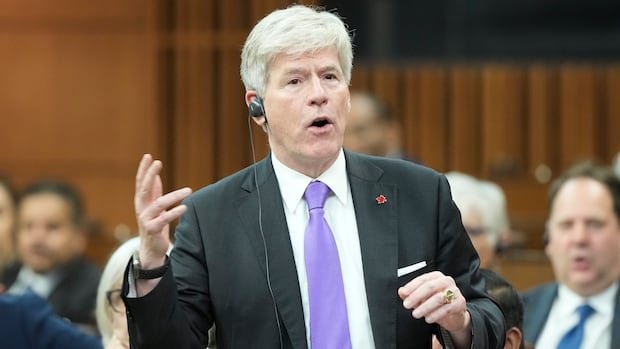

Canada aims to construct up to 10 new nuclear reactors within the next 15 years, expand the sale of Canadian-made reactors globally, and double uranium exports, according to Energy Minister Tim Hodgson. The minister unveiled a new national strategy for nuclear power, describing it as a blueprint for a “new civilian nuclear renaissance” to support the government’s objective of doubling the country’s electrical grid capacity by 2050.
Highlighting the necessity of nuclear energy for achieving a low-carbon economy and ensuring reliable baseload power, Hodgson emphasized that nuclear energy was vital for Canada to enhance its energy capabilities and become an energy superpower.
The strategy outlines plans to commence construction on two large-scale reactors by 2035, with an additional five reactors in the planning or development phase by 2040. It also envisions at least one reactor being under construction outside Ontario by 2035 and the deployment of a Canadian-made microreactor to a remote community by the late 2030s.
Conservative Leader Pierre Poilievre expressed skepticism about the plan’s effectiveness, emphasizing the need for tangible results over mere announcements. Currently, Canada operates four nuclear power plants—three in Ontario and one in New Brunswick—which collectively contribute around 15% of the country’s electricity.
Proposed developments include a new facility at the Darlington nuclear plant in Ontario that would house the first small modular reactor in the G7, capable of generating up to 300 megawatts per unit. Additionally, Saskatchewan is exploring the potential implementation of small nuclear reactors by the mid-2030s.
The government is committed to collaborating with Alberta on developing a nuclear power plant strategy. Officials estimate that the construction of the outlined reactors could exceed $100 billion, with potential funding sources including the Canadian Infrastructure Bank and the Canada Growth Fund.
Emphasizing the potential for job creation, Hodgson stated that the strategy could double the current 90,000 jobs in Canada’s nuclear sector over the coming decades. The plan also aims to expand the export of Candu reactors to new markets, with a focus on establishing Canada as a reliable uranium export partner and leveraging nuclear energy for geopolitical purposes.
The document clarifies that Prime Minister Mark Carney was not involved in developing the strategy due to the ethics screen in place, as he holds stock options in companies that compete with Candu. The strategy underscores the importance of reactor exports in building enduring partnerships that advance Canada’s foreign policy interests.
Should global sales of Candu reactors fall short, the strategy suggests enhancing domestic uranium enrichment to fuel other reactors, particularly as Western allies reduce reliance on enriched uranium from Russia. Discussions are ongoing regarding the transfer of impact assessments for nuclear projects to the Canadian Nuclear Safety Commission.
The strategy reaffirms the government’s commitment to streamlining regulatory processes and increasing energy production across the country. Poilievre stressed the need for concrete outcomes rather than mere promises to drive progress in the energy sector.