

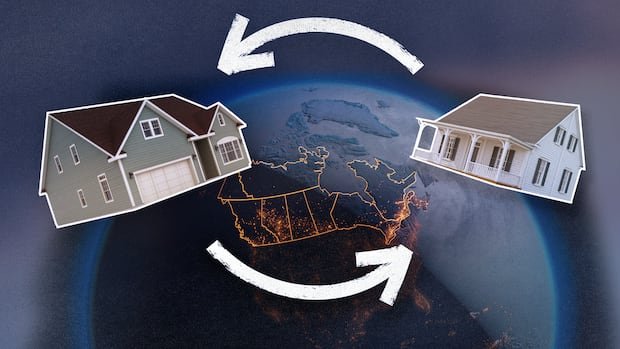

As travel expenses rise, more Canadians are seeking innovative ways to save money on vacations, starting with accommodations. Instead of traditional bookings, an increasing number of Canadians are engaging in home exchanges to cut down on one of the most significant trip costs.
One such individual is Kristy Moore, a teacher from Calgary, who ventured into home exchange in 2023 by swapping homes in Seattle. She has another exchange planned for Victoria this summer and aims to explore Japan next year. Moore highlighted that escalating airfare and accommodation costs have limited her travel options, but home exchanges have broadened her horizons to destinations worldwide.
Unlike typical rentals, home exchange platforms allow members to directly swap homes or earn credits by hosting travelers, which can be redeemed for future stays. These platforms generally charge an annual membership fee instead of a per-night rate. Moore emphasized that the savings from home exchanges have made longer trips feasible again by significantly reducing accommodation expenses.
The trend of home swapping is gaining popularity in Canada, driven partly by financial considerations. People Like Us, an Australia-based company, reported a 20% increase in Canadian membership in the past year, surpassing global growth rates. Similarly, HomeExchange noted a 30% surge in Canadian membership, with over 15,000 home exchanges planned in Canada for June, July, and August, representing a 29% increase from the previous year.
HomeExchange CEO Emmanuel Arnaud highlighted that home exchanges offer a cost-effective way to secure accommodation during travel, especially amid rising travel costs. The platform has witnessed accelerated growth in Canada compared to its global average, with Montreal emerging as a top destination for exchanges.
Another platform, Kindred, disclosed that trips booked to Canada for summer 2026 were 40% higher than the previous year, with a 70% increase in Canadian home listings between 2024 and 2025. Kindred operates on a credit-based model, where users pay a nightly service fee and for cleaning services. While most listed homes are primary residences, renters are permitted on all platforms, subject to lease agreements and insurance considerations.
Beyond monetary savings, home exchanges offer a unique travel experience for many participants. Tatiana Giberson from Calgary highlighted that immersion in local lifestyles distinguishes home exchanges as a distinctive way to travel. She emphasized that eliminating lodging and vehicle expenses allows travelers to allocate more funds to food and entertainment, enhancing the overall travel experience.
Experts, like hospitality professor Frédéric Dimanche, foresee continued growth in the home exchange trend due to its cost-saving appeal and the desire for authentic travel experiences. Dimanche underlined that home exchanges complement traditional accommodation options by providing a community-oriented and predictable pricing alternative.
While trust remains a significant concern for first-time users considering home exchanges, effective communication and platform safeguards can alleviate apprehensions. Verified member profiles, reviews, secure messaging features, and property damage insurance contribute to building user confidence. Giberson highlighted the importance of mutual goodwill within the home exchange community, emphasizing trust and positivity among participants.