

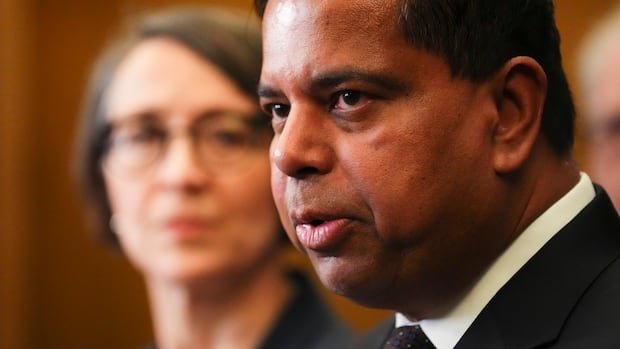

David Hicks, a resident of Ottawa, has been facing challenges in disposing of his late father’s rifle due to issues with the federal government. As the executor of his father’s estate, Hicks has been attempting to declare the semi-automatic firearm he inherited through the government’s banned gun compensation program. His main goal is to ensure compliance with the law and secure financial compensation for his mother, who is a widow.
Despite reaching out to the program when it first launched in January and following up multiple times over the past two months, Hicks has encountered delays and lack of responsiveness. He was initially informed that as an estate executor, he needed to follow a different process and would receive paperwork within 10 business days. However, this did not materialize, leaving Hicks frustrated as the deadline for declaration passed on March 31.
The Assault-Style Firearms Compensation Program has faced criticism and challenges beyond Hicks’ situation. The low participation, resistance from gun owners and provinces, and even some police forces opting out have been notable issues. The federal government reported that 67,000 assault-style firearms were declared by nearly 38,000 owners nationwide. This falls short of the 136,000 firearms the government had budgeted for under the $248.6 million program allocation.
PolySeSouvient, a prominent gun control advocacy group, expressed disappointment at the program’s uptake but noted it wasn’t catastrophic. The organization highlighted the divided response to the buyback initiative, indicating that only about half of prohibited weapons owners have engaged with the compensation program. The lack of broad support for the policy has been evident, with proponents like PolySeSouvient backing it while facing opposition from various quarters, including gun owners, hunters, sport shooters, and the Conservative Opposition.
As the program transitions to the collection phase, challenges persist, with limited local police support and opposition from several provinces potentially hindering its effectiveness. Despite facing obstacles, the federal government remains committed to implementing the program. However, the reluctance of some provinces and police forces to participate raises doubts about the program’s ability to achieve its goal of eliminating assault-style firearms in Canada.
In a statement, the federal public safety minister’s office emphasized the importance of compliance with the law, reminding individuals of the upcoming deadline to dispose of or deactivate outlawed firearms by October 30. The uncertainty surrounding the buyback program was further heightened by the Supreme Court’s decision to hear challenges to the policy, adding to the complexity of the situation.
David Hicks, along with many others affected by the buyback program, continues to navigate the challenges and uncertainties surrounding the process, hoping for a resolution as the program progresses.