

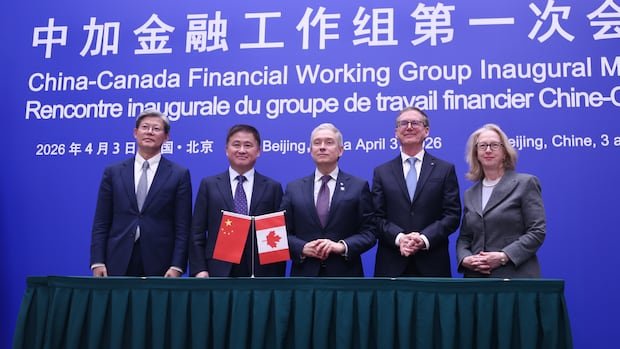

Finance Minister François-Philippe Champagne highlighted the importance of relationship-building during his recent visit to China, despite Chinese tariffs on Canadian pork products remaining unchanged. Champagne emphasized that resolving trade issues takes time and effort, stating that it is essential to nurture connections and engage in discussions.
Canadian pork continues to be subjected to a 25 per cent surcharge, a response to Ottawa’s imposition of a 100 per cent tariff on Chinese electric vehicles. In January, an agreement was reached allowing 49,000 Chinese electric vehicles to enter Canada at reduced rates in exchange for potential reductions in tariffs on Canadian agricultural products by China.
Champagne acknowledged the challenges surrounding pork exports and mentioned other unresolved matters such as seafood trade. He stressed the broader goal of deepening collaboration between the Canadian and Chinese governments based on shared interests and mutual engagement.
During his visit, Champagne discussed opportunities for the Canadian financial services sector to expand operations in China with Chinese Finance Minister Lan Fo’an and Vice-Premier He Lifeng. This includes advocating for Canadian banks to acquire more licenses to provide a wider array of services in China and gain increased access to bond markets.
The minister anticipates a reciprocal visit from Lifeng to Canada in the near future. Champagne also brought up Canada’s stance on human rights and the importance of maintaining supply chain integrity, following recent concerns raised by Liberal MP Michael Ma regarding forced labor in China.
Champagne reiterated Canada’s commitment to upholding international standards in bilateral trade and emphasized the significance of transparent supply chains. He also addressed the need for continuous dialogue on critical issues to ensure a sustainable and ethical trade relationship between the two countries.