


Over 50 countries are convening in Colombia for a unique summit dedicated to phasing out oil, gas, and coal, marking a departure from the stalled discussions on fossil fuels at UN climate talks. The Transitioning Away from Fossil Fuels conference kicks off today in Santa Marta to address the challenge of reducing reliance on fossil fuels driving the climate crisis outside the regular UN process.
The summit is not geared towards producing a binding treaty, but rather aims to facilitate progress among a smaller group of nations willing to tackle the practical aspects of transitioning away from fossil fuels. Nikki Reisch, director of the climate and energy program at the Center for International Environmental Law, views this conference as a pivotal moment to prioritize fossil fuel discussions.
However, the participation of Canada, the leading oil and gas producer at the summit, adds complexity to the event. Despite not yielding a formal agreement, the conference aims to focus on actionable steps rather than debating the necessity of phasing out fossil fuels.
Oil, gas, and coal account for the majority of greenhouse gas emissions contributing to global warming. While these fuels play a crucial role in powering economies, they have been underrepresented in UN climate discussions due to influence from fossil fuel lobby groups and oil-producing nations preventing meaningful conversations on fossil fuel phaseout.
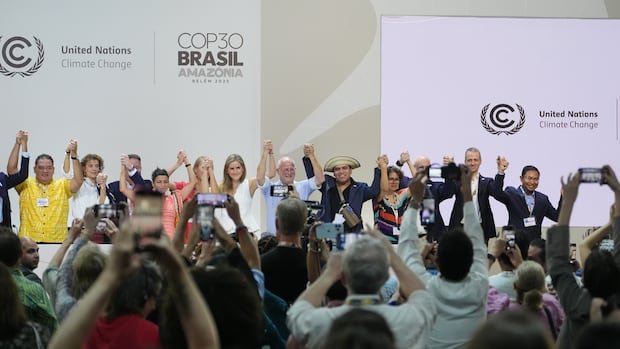
Following the COP30’s failure to establish a roadmap for fossil fuel phaseout, Colombia and the Netherlands decided to host the Santa Marta conference to break away from the traditional consensus-based approach of UN gatherings. The summit, running until April 29, is envisioned to stimulate future negotiations and actions towards decarbonization.
Canada’s participation, despite sending negotiators instead of ministers, is essential given its status as a major fossil fuel producer. The federal government reiterates its commitment to achieving net-zero emissions by 2050, acknowledging the challenges posed by the oil and gas sector, particularly the growth in emissions from the oilsands.
While the Santa Marta conference is not anticipated to result in a formal treaty, it serves as a stepping stone for future discussions to advance decarbonization efforts. The gathering could empower a coalition of countries to advocate for fossil fuel issues at upcoming UN climate conferences and counter opposition from major polluting nations.
A follow-up conference hosted by Tuvalu is already in the works, aimed at addressing the drastic impact of rising sea levels on the Pacific Island nation. The outcome of the Santa Marta summit is expected to set the stage for continued momentum towards a sustainable path forward.
With files from Susan Ormiston
Tag: rewrite-pending