

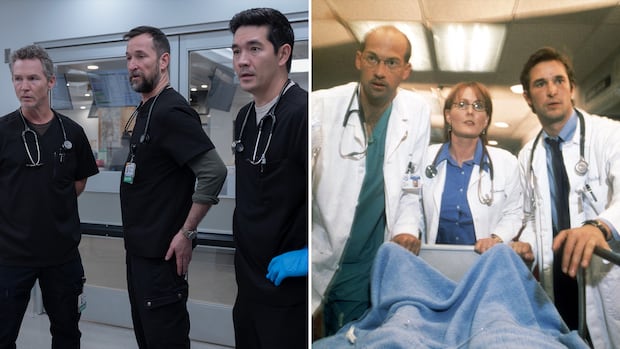

The Creator Network of CBC Ottawa provides a platform for young, diverse, and distinctive storytellers to create original video content for CBC, allowing them to share their narratives from their unique perspectives.
Explore additional stories from the Creator Network here or connect with us to submit your story idea.
During his inaugural full season with the Rockford IceHogs of the American Hockey League, Jacob LeGuerrier began to experience troubling symptoms: a tightness in his chest and a dull pain extending down his left side.
The defenceman from Ottawa continued to play as these symptoms escalated, game after game. Eventually, he began to feel irregular heartbeats and realized that something was amiss with his health.
“That’s when I thought to myself: I don’t believe this is due to the physicality of hockey,” LeGuerrier reflected. “It could be something different.”
LeGuerrier found himself in the hospital, where he received a diagnosis that would keep him away from the sport he loved for several years.
The ex-prospect for the Montreal Canadiens recounted his experience of having his hockey aspirations interrupted and how he coped with this unexpected hiatus in Heartline, a short documentary produced for CBC Ottawa’s Creator Network.

Professional player Jacob LeGuerrier says his life has revolved around hockey since he was three years old. He was drafted by the Montreal Canadiens but had to put his professional aspirations on hold when diagnosed with viral myocarditis, prioritizing his heart health. He shares his journey in this short documentary for CBC Ottawa’s Creator Network, titled “Heartline.”
A shocking and serious diagnosis
In 2022, LeGuerrier discovered that his health issues stemmed from viral myocarditis, a condition characterized by inflammation of the heart muscle.
This condition is often triggered by a minor virus or other illnesses, as noted by Dr. Chris Glover, an interventional cardiologist at the University of Ottawa Heart Institute.
While many individuals recover relatively swiftly from symptoms like chest pain or breathlessness, Glover indicates that for some, recovery can be prolonged. He typically recommends a period of three to six months of complete rest from physical activities, followed by a gradual and closely supervised reintroduction to exercise.
Some people have said it’s like feeling like you’re going to die.Hélène, LeGuerrier’s mother
However, the symptoms are indeed severe, and for LeGuerrier and his family, quite frightening.
“Some people have said it’s like feeling like you’re going to die,” Jacob’s mother Hélène shared.
She traveled to Illinois during the initial days of LeGuerrier’s condition before he returned to Ottawa, optimistic for a brief recovery.
However, his symptoms continued, resulting in multiple visits to the emergency room.
“At that point, it was more of a fear for my life,” LeGuerrier remarked.
He described a time filled with significant uncertainty and self-doubt, where he spent numerous challenging nights in the hospital, grappling with his mental well-being.
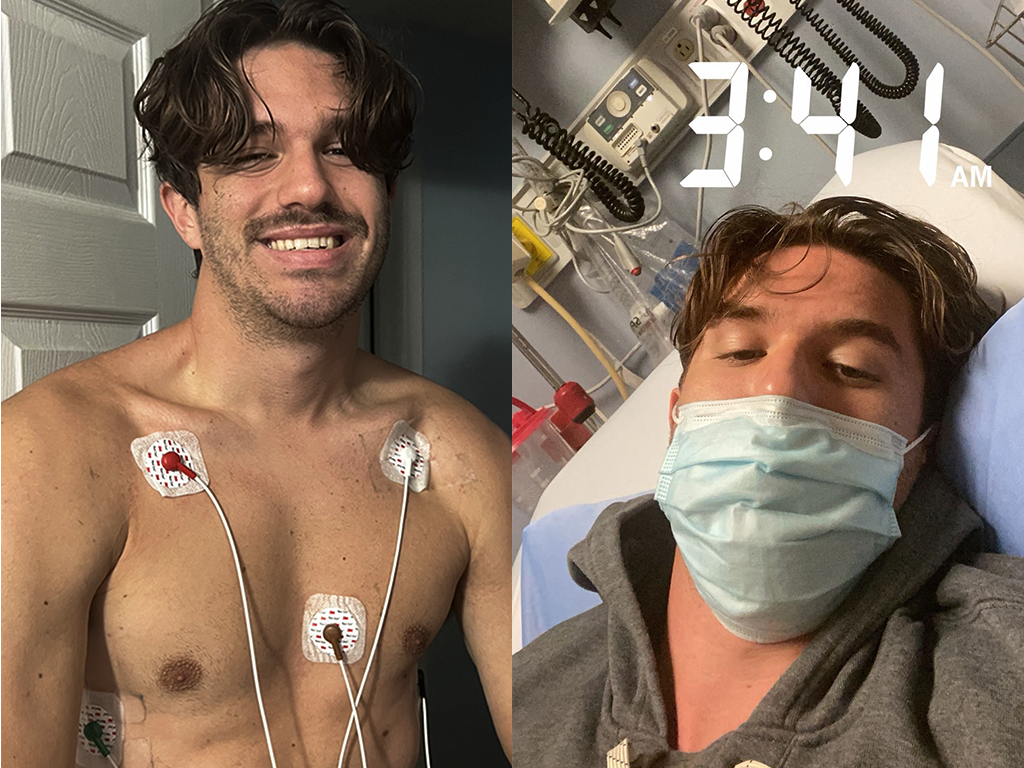
Jacob LeGuerrier shared that he faced countless sleepless nights and had to return to the hospital repeatedly for heart monitoring. (Submitted By Jacob LeGuerrier)
“On some of those nights where I couldn’t sleep, I didn’t really care about hockey,” he recounted, remembering how during those early days, even a simple family walk would require stopping to rest due to discomfort.
It took two years for doctors to finally give him the go-ahead for light exercise, but even then, the symptoms would occasionally resurface.
“Then, the fear would return, and I was hesitant to push myself too hard because they told me this was obviously serious,” LeGuerrier explained.
-
More hockey players being diagnosed with blood clots than ever
-
Canada’s Davies to miss 3 World Cup qualifying matches due to heart muscle issue after bout of COVID-19
With no ability to engage in exercise or play hockey, LeGuerrier utilized his time to launch a clothing brand called Heartline Apparel, donating part of the earnings to the University of Ottawa Heart Institute. He also resumed his education, pursuing a degree in arts and health sciences at the University of Ottawa.
As time went on, his symptoms began to diminish. By late 2024, he was able to join the University of Ottawa’s hockey team, although he recalls setbacks, such as a practice that left him unable to get out of bed the following day.
Eventually, in the fall of 2025, he returned to professional hockey, playing his first game with the Indy Fuel of the ECHL, with his former coach also present behind the bench.
“It had been such a long break that I started to doubt whether I would ever return,” LeGuerrier said.
“So it was quite a special moment, especially with the same coach I had during my earlier time there. I think he was also thrilled to witness this full-circle moment.”

LeGuerrier’s numerous medals adorn a wall in his parent’s home. (Submitted by Mark LeGuerrier)
An unrelated head injury
Regrettably, after competing throughout the fall with the Indy Fuel, LeGuerrier sustained an unrelated head injury while playing with the University of Ottawa GeeGees, which sidelined him for the remainder of the season.
He reports that he is currently recovering and aims to play again next year, continuing his pursuit of high-level hockey.
However, he is also committed to sharing his experience to inform other young athletes that while hockey matters, health is equally essential.
There are no guarantees about how much time one has to chase their dreams.
“For me, it’s all about cherishing the moment,” LeGuerrier stated. “You never know what might happen.”
- Have an idea for your own Creator Network video? Discover how to pitch your story here.

Creators Paul Barasa, left, and Dhruv Gajjar, right, collaborated with Jacob LeGuerrier to share his story in a documentary produced with the aid of CBC Ottawa’s Creator Network and Marcus Lautenbach. (Marcus Lautenbach)