
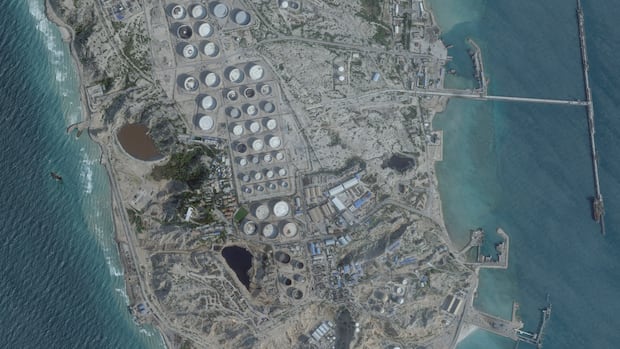

On Monday, the United States permitted the sale of Iranian oil, loosening longstanding sanctions as part of efforts to finalize a peace agreement with Tehran, which includes pledges regarding nuclear inspections and ensuring open transit through the Strait of Hormuz.
The Treasury Department announced a general license that authorizes the sale of crude oil, as well as petrochemical and petroleum products originating from Iran, valid through August 21.
According to the license, Iranian oil may be imported into the U.S. if necessary for completing its sale, delivery, or offloading. The U.S. has not significantly imported Iranian oil since the sanctions were imposed following the 1979 revolution.
“In light of the constructive discussions currently taking place in Switzerland, Iran has agreed to facilitate free and unobstructed transit in the Strait of Hormuz and to allow International Atomic Energy Agency (IAEA) inspectors access to their country,” Treasury Secretary Scott Bessent stated on X.
“As part of this arrangement, the Treasury has issued a temporary general license valid for 60 days, permitting the production, delivery, and sale of Iranian oil.”
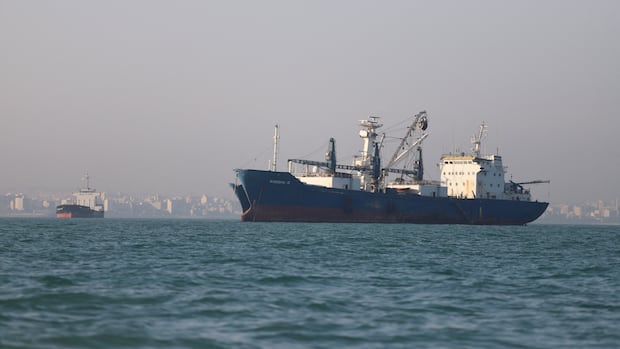
Iran claims it has closed the Strait of Hormuz, a crucial passage for international oil and gas shipments, citing supposed ceasefire breaches by the U.S. and Israel. This action precedes discussions in Switzerland aimed at fostering an interim agreement between Washington and Tehran.
As part of a memorandum of understanding signed last week, the U.S. agreed to grant waivers for the export of Iranian crude oil, along with petroleum products, derivatives, and all related services, including banking, insurance, and transportation.
Payments to Iran may be conducted using U.S. dollar-denominated funds, as per the license.
Notably, Cuba, North Korea, and Crimea are excluded from the scope of this license.
The U.S. first imposed sanctions on Iran in 1979, following the seizure of the U.S. embassy in Tehran by revolutionary students, which resulted in the hostage situation. Since then, additional sanctions have been introduced in response to Iran’s nuclear program and its support for groups deemed terrorist organizations by the U.S.
-
Vance says talks with Iranian officials set ‘good foundation’ for a deal to end war
-
The U.S. says it’s open. Iran says it’s closed. The Strait of Hormuz remains precarious
Independent Chinese refiners have emerged as the primary purchasers of Iranian oil under sanctions, benefiting from significant discounts while other buyers have steered clear. Prior to the reinstatement of U.S. sanctions in 2018, nations such as India, South Korea, Japan, Italy, Greece, Taiwan, and Turkey were also significant customers of Iranian crude.
Mediators reported on Monday that Washington and Tehran have shown “promising progress” during the initial round of discussions aimed at achieving a final peace agreement. These negotiations commenced under the framework of the memorandum of understanding established last week to prolong a fragile ceasefire from April for at least another 60 days.
Oil prices experienced a sharp increase when Tehran initiated a blockade of the Strait of Hormuz, leading to a U.S. blockade of Iranian ports; however, following the interim agreement, prices have dropped to their lowest levels since before the onset of the conflict on February 28, which was marked by U.S.-Israeli strikes on Iran.
Tag: rewrite-pending