

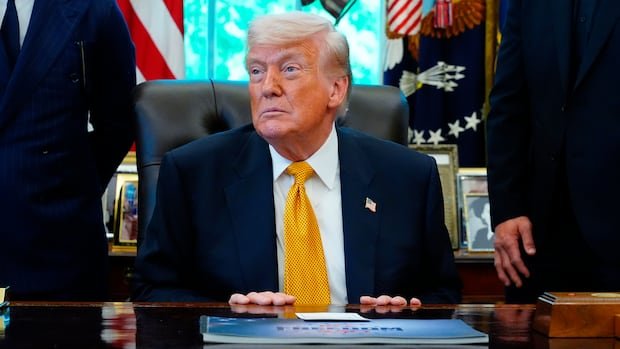

Shortly after initiating a naval blockade in mid-April, U.S. President Donald Trump forecasted that Iran’s oil pipelines would face imminent disruptions leading to explosions due to the inability to export crude oil. While Trump’s dire prediction did not materialize, there are indications that the blockade is beginning to impact Iran’s economy.
The restrictions on ship traffic to and from Iranian ports have significantly hampered the country’s oil production, causing a slowdown. This, coupled with the plummeting value of Iran’s currency against the U.S. dollar and reports of extensive job layoffs, highlights the adverse effects of the blockade.
President Trump remarked at the White House this week, “They can’t pay their soldiers. The money is worthless.” The key question now revolves around whether the economic repercussions will compel the Iranian regime to meet the Trump administration’s conditions for a peace agreement, including ceasing nuclear enrichment activities and relinquishing control of the Strait of Hormuz.
According to Edward Fishman, the director of the Center for Geoeconomics at the Council on Foreign Relations in New York, the effectiveness of the blockade lies in Iran’s heavy reliance on revenue from oil exports.

Fishman explained to CBC News, “Without that revenue, it’s become incredibly challenging for the Iranian government to meet payroll obligations and secure imports from other nations.” He emphasized the immense impact on Iran’s economy, asserting that the blockade is exerting significant economic pressure on the government and the Iranian populace at large.
Anticipating the Peak of Economic Damage
While analysts widely agree that the blockade will inflict harm on Iran’s economy, there is divergence regarding when the impact will reach its zenith.
Two critical factors influencing the situation are the amount of crude oil Iran managed to export before the blockade came into effect and the capacity for storing oil before production shutdowns become inevitable due to storage constraints.
As per data from ship-tracking company Vortexa and a report by the Soufan Center, Iran has stored over 140 million barrels on floating tankers beyond the blockade zone, mainly destined for China. This reserve could sustain Tehran’s pre-war oil revenue levels until at least August.
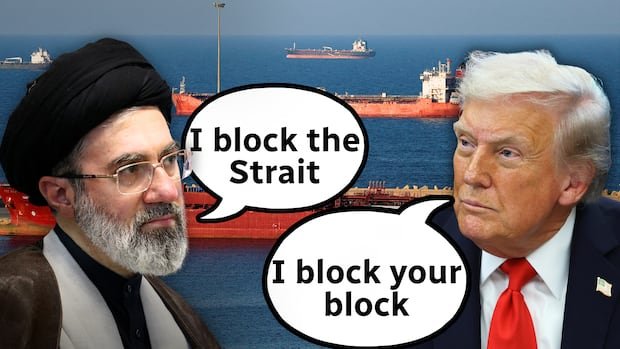
President Donald Trump announced the United States would apply its own blockade of the Strait of Hormuz in retaliation for Iran’s de facto shutdown, which is now stretching into its seventh week. But, as Andrew Chang explains, responding this way to Iran’s control of 20 per cent of the world’s energy supply could pose several risks as the war in the