

Israeli airstrikes resulted in the deaths of at least five individuals, including a journalist, in southern Lebanon on Wednesday, as reported by Lebanon’s state news agency. Hezbollah claimed responsibility for launching an attack drone at Israeli forces in the south, causing strain on the ceasefire between the two nations.
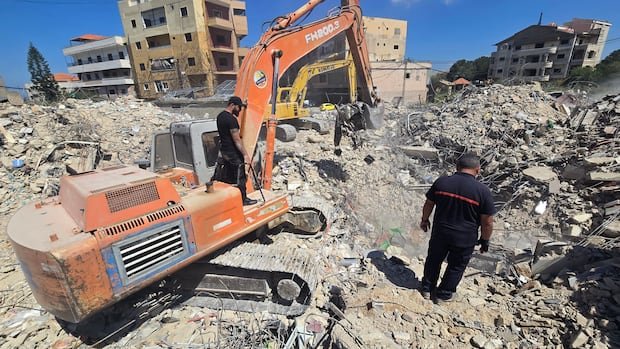
According to Lebanon’s state-run National News Agency (NNA), an Israeli strike targeted a car in at-Tiri village, claiming the lives of two occupants. Additionally, an Israeli airstrike in the town of Yohmor in southern Lebanon led to the deaths of two more individuals, as reported by NNA and Lebanon’s Health Ministry.
In the vicinity of at-Tiri, the airstrikes also injured a journalist and trapped another under rubble, delaying rescue efforts due to ongoing Israeli fire, confirmed by Lebanon’s health ministry, a senior military official, and press advocates. Tragically, the body of Amal Khalil was discovered under the rubble, as confirmed by a senior military official.
Further incidents were reported, including a strike in Jabbour, located in the West Bekaa region, resulting in one fatality and two injuries, according to the state news agency. Israel’s military, however, denied any involvement in that particular area.
As discussions between Lebanese and Israeli ambassadors were set to take place in Washington, Lebanese President Joseph Aoun expressed Beirut’s intention to seek an extension of the current 10-day ceasefire mediated by the U.S., scheduled to end on Sunday.
Tensions between Hezbollah and Israel reignited on March 2, triggered by the Lebanese group’s support for Iran. The ceasefire in Lebanon, separate from Washington’s engagements with Tehran, was urged by Iran to be encompassed within a broader truce.
In response to alleged Israeli violations during the ceasefire, Hezbollah announced the firing of a drone at an Israeli post in Bayada village. Israel’s military countered, accusing Hezbollah of breaching the ceasefire by launching an aggressive aircraft toward Israeli soldiers in southern Lebanon, which was intercepted before crossing into Israel.
French President Emmanuel Macron confirmed the death of one of the three French soldiers injured in a prior attack against peacekeepers in Lebanon. Another soldier had been killed in the same incident carried out by Hezbollah, as previously stated by Macron.
Lebanon’s objective in the upcoming talks is to halt Israeli attacks, withdraw Israeli troops from Lebanese territory, secure the release of Lebanese detainees in Israel, deploy Lebanese troops along the border, and initiate the reconstruction process, as outlined by President Aoun.
Stressing the importance of disarming Hezbollah, Israel’s Foreign Minister Gideon Sa’ar called on Lebanon to collaborate in achieving this goal, emphasizing that Hezbollah is the primary obstacle to peace and normalization between the two countries.
Israel’s military has implemented a buffer zone extending approximately 10 kilometers into southern Lebanon to mitigate threats posed by short-range rockets and anti-tank missiles targeting northern Israel. Over 2,400 casualties have been recorded in Lebanon since Israel initiated an offensive in response to Hezbollah’s actions on March 2.
Hezbollah, attributing the ceasefire in Lebanon to Iranian influence, criticized Beirut for engaging in talks with Israel, reflecting broader divisions within the government concerning Hezbollah’s disarmament.
U.S. Secretary of State Marco Rubio is slated to attend the forthcoming meeting, with Lebanon represented by its ambassador to Washington, Nada Moawad, and Israel by its ambassador, Yechiel Leiter. Notably, Lebanon and Israel have maintained an official state of war since Israel’s establishment in 1948.