


Manitoba’s government engaged in discussions last autumn with U.S. energy consultants regarding the potential establishment of a large-scale AI data facility close to Winnipeg. The aim was to explore using private investments to construct an $18 billion hydroelectric plant on the Nelson River, as per documents acquired by CBC News.
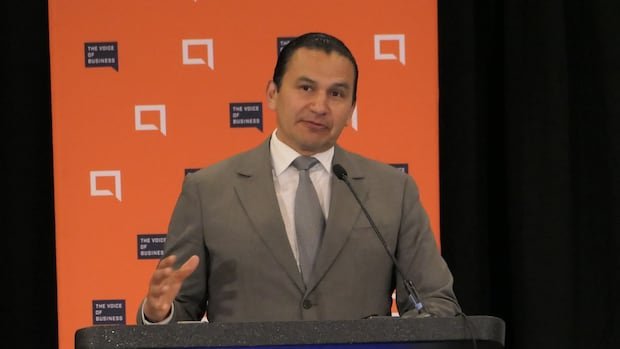
Premier Wab Kinew has disclosed that the plan for a massive data center has been abandoned, but there is interest in resurrecting the Conawapa dam project on the Nelson River, which was put on hold in 2014 due to escalating costs. Correspondence, meeting notes, and a presentation document obtained by CBC News reveal that high-ranking officials in Manitoba’s NDP government, along with three deputy ministers, held talks in October and November 2025 with representatives from Rothschild & Co., an international financial services and advisory firm.
The discussions centered on two main objectives: exploring the feasibility of establishing an AI data center requiring 250 to 300 megawatts from Manitoba Hydro’s grid and evaluating the potential for constructing a hyperscale data facility. Manitoba officials saw an opportunity due to the immediate power availability, clean hydro power source, lower cooling expenses, and the possibility of expedited permitting.
The province intended to attract major players and operators in the hyperscale data center sector and sought to capitalize on the current boom in AI and data centers. However, Premier Kinew has since shifted his stance, citing concerns over excessive energy consumption and uncertain long-term economic benefits associated with hyperscale data centers.
Regarding the hydroelectric project, the government revisited plans for the Conawapa dam, downstream from existing Manitoba Hydro facilities, which is estimated to cost between $18 billion and $20 billion. The proposal included exploring funding models leveraging third-party private capital to mitigate the impact on the provincial balance sheet.
Kinew, who had initially shown reluctance towards new hydro projects, now sees the necessity for additional power generation in the future. The province is considering various financing options, including partnerships with private entities, to facilitate the ambitious hydro project.
In light of changing perspectives on AI data centers and hydro projects, Kinew emphasized the importance of evidence-based decision-making and evaluating proposals in the best interest of Manitoba’s economy. The premier’s stance has drawn criticism and raised questions about potential privatization and financial risks associated with large-scale infrastructure projects.
The province is exploring partnerships with financial advisors and potential private investors to advance these projects, underscoring the need for careful consideration and strategic planning to ensure the projects’ success without compromising the province’s interests.