

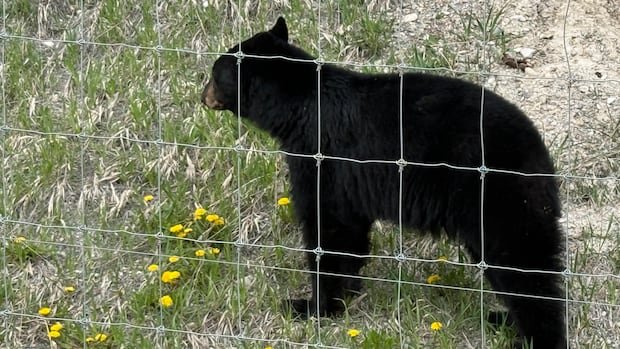

Last week’s tragic incident where a Saskatchewan couple lost their lives in a black bear attack near McTavish Lake, a remote area in the province, has reminded many of another bear-related fatality that occurred just months before. Although these events are deeply distressing, experts emphasize that fatal bear encounters remain exceptionally uncommon in Saskatchewan.
The Ministry of Community Safety in Saskatchewan confirmed the involvement of a black bear in the deaths of Jay and Deb MacDonald, discovered near McTavish Lake, located approximately 90 kilometers north of La Ronge. This unfortunate incident follows the death of Hrishikesh Koloth, 27, in a separate black bear attack at a remote uranium exploration site in northeast Saskatchewan, marking the fourth known fatal bear encounter in the province’s history.
In a previous tragic event in 2020, Stephanie Blais, aged 44, was killed near her family’s cabin north of Buffalo Narrows, around 220 kilometers northwest of La Ronge. The province’s first recorded bear mauling fatalities occurred in 1983, claiming the lives of two men in incidents near what is now known as Narrow Hills Provincial Park, previously Nipawin Provincial Park.
An academic report on bear incidents from Lakehead University revealed a total of 39 bear-related fatalities across Canada between 1990 and 2023, with 17 involving grizzly bears and 22 linked to black bears. While such occurrences are rare, they are more likely to happen in secluded regions, according to Doug Clark, a bear specialist at the University of Saskatchewan.
Michael Runtz, a retired biology professor from Carleton University, Ottawa, noted that despite encountering numerous black bears in remote parts of Ontario over the years, he has never been attacked by one. Runtz highlighted that black bears are generally less aggressive than grizzlies, known for being more shy and retiring, making black bear attacks infrequent.
Experts like Clark and Runtz attribute bear attacks to large male bears displaying predatory behavior, often seeking new food sources, including humans. Clark suggested that the timing of these incidents in Saskatchewan, possibly influenced by factors like snow cover affecting food availability, could have heightened stress among bears, leading to the recent spate of deadly encounters.
Conservation officers responding to the recent attack in Saskatchewan located and euthanized a bear suspected of causing the deaths of Jay and Deb MacDonald. The province announced that the bear’s carcass would undergo a necropsy at the Western College of Veterinary Medicine in Saskatoon to determine its condition and shed light on the circumstances of the attack.
While emphasizing the rarity of such incidents, Clark advised caution when venturing into bear-populated remote areas in the province. Both experts recommended carrying bear spray and outlined safety measures such as staying calm, backing away slowly, and appearing larger and more assertive if encountering a black bear, rather than fleeing or playing dead, as advocated for grizzly bear encounters.