

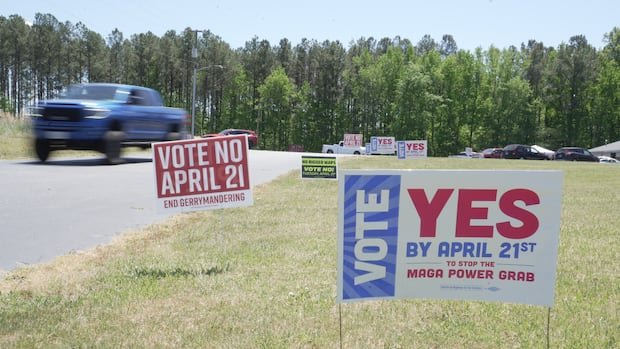

Virginia voters have approved a redistricting plan during a midterm election, potentially benefiting Democrats with an increase of four U.S. House seats. This constitutional amendment, supported by voters, bypasses a bipartisan redistricting commission and faces scrutiny from the state Supreme Court. The initiative follows national efforts triggered by President Donald Trump, urging Republicans to redraw districts in Texas. Historically, congressional redistricting occurs once per decade following the census.
Trump endorsed a “No” vote in Virginia, claiming it was crucial to “SAVE YOUR COUNTRY!” Democrats framed the redistricting move as a response to Trump, countering efforts made by other states to favor Republicans in congressional elections. The campaign for redistricting featured ads with former President Barack Obama.
Republicans have vowed to challenge Virginia’s new map in court, as their slim House majority is at risk. The midterm elections historically see losses for the party in power, potentially impacting Trump’s agenda. Democrats aim to secure control of the House, which could enable them to impede Trump’s policies or pursue impeachment proceedings.
The current House balance stands at 217-213 in favor of Republicans, with four vacancies. Both parties anticipate gains in newly redrawn districts, with Republicans eyeing up to nine additional seats and Democrats striving for wins in California and Utah. Democrats aim to secure up to 10 seats in Virginia through the revised map, focusing on areas like northern Virginia and college towns.
The redistricting saga continues as Florida prepares for potential map revisions, and the U.S. Supreme Court deliberates a voting rights case in Louisiana. The upcoming elections carry an element of unpredictability, with a significant number of incumbents not seeking re-election, signaling a notable turnover in Congress.