

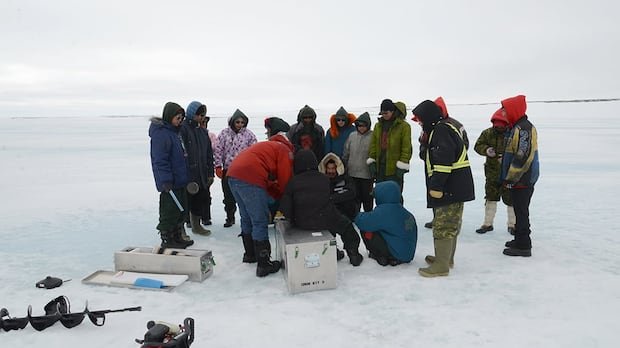

Candice Sudlovenick, an outreach programs manager for SIKU, finds fulfillment in her role. She attributes her passion for research to her time as a youth participant in Ikaarvik over ten years ago, where she discovered her voice and the value of being heard. A recent article in Arctic Science, co-authored by Danielle Nowosad, a postdoctoral fellow at the University of Calgary of Métis heritage, discusses the methods of Inuit leadership in research, emphasizing the growing emphasis on including Indigenous perspectives in Canadian research initiatives.
Ikaarvik originated when a group of Inuit youth, who graduated from the Environmental Technology Program at Nunavut Arctic College in Pond Inlet in 2010, desired to extend their environmental work beyond the classroom setting. The organization’s primary goal is to equip Inuit youth with the skills necessary to pursue careers that bridge traditional Inuit knowledge with scientific research, thus transforming obstacles into opportunities.
Sudlovenick highlighted the importance of challenging historical research relationships with communities, emphasizing that Inuit contributions extend beyond traditional roles. Nowosad echoed this sentiment, noting that Inuit communities have long advocated for more meaningful participation in research initiatives. She emphasized the similarities between Western scientific methodologies and Inuit Qaujimajatuqangit (IQ), underscoring the depth of respect inherent in Indigenous knowledge systems, which Western science sometimes lacks.
Despite progress in fostering collaboration between research entities and Indigenous communities, barriers persist. Nowosad pointed out that the fast-paced nature of academia and funding structures often clash with the time-intensive nature of community-based research. Balancing the demands for quick results with the need for deep, intentional community engagement remains a challenge.
Amidst the rapidly changing Arctic landscape due to climate change, the integration of local knowledge is increasingly vital. Sudlovenick emphasized the importance of valuing Indigenous knowledge on par with Western scientific practices to empower youth in northern regions. As newer generations grow up with a blend of modern technology and traditional wisdom, the gap between Western science and Inuit Qaujimajatuqangit is expected to narrow, paving the way for a more unified approach to Arctic research.