

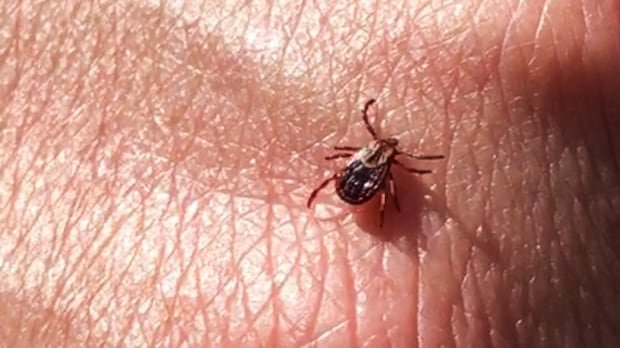

Applying woodchips along woodland trails has been revealed by a recent study from the University of Ottawa to be an effective method in reducing local tick populations. The research indicates that this simple solution could lead to a decrease in tick bites and the associated risk of Lyme disease for individuals walking in forested areas.
The study conducted by the University of Ottawa researchers focused on two locations within Ottawa’s Greenbelt: the Mer Bleue sector in the east and the Stony Swamp sector in the west. By applying untreated woodchips and woodchips treated with the pesticide deltamethrin on 20 trail sections, each 50 meters in length, the research team observed substantial reductions in tick numbers. The untreated woodchips led to a 50% decrease in tick populations, while the woodchips treated with deltamethrin resulted in a remarkable 99% reduction, as reported by Katarina Ost, a member of the research team.
Woodchips serve as an effective deterrent for ticks as these parasitic arachnids typically climb vegetation such as grass to attach themselves to hikers or pets. By placing woodchips on trails, the growth of the vegetation that ticks rely on for climbing is hindered. According to Ost, wider, heavily used trails with high tick concentrations are ideal for implementing this strategy on a larger scale.
The application of deltamethrin-treated woodchips was particularly impactful in reducing tick populations without posing risks to pets due to the pesticide’s limited mobility once adhered to a surface. Additionally, creating a border of wood chips, mulch, or gravel around yards can help prevent tick infestations as recommended by the federal government.
Dr. Christopher Labos, a cardiologist and epidemiologist at McGill University, emphasized the importance of controlling tick populations to curb the spread of tick-borne diseases. While the study showed promising results in decreasing tick encounters, Labos highlighted the necessity for individuals to remain on designated paths for the woodchips to be effective.
Further research is needed to establish a direct correlation between reduced tick populations and a decrease in Lyme disease cases. The ultimate goal is to confirm that fewer ticks translate to lower incidences of Lyme disease, reinforcing the significance of tick control strategies.