

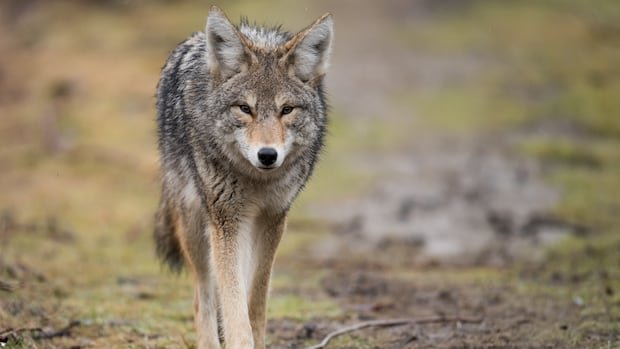

A recent study highlights the increased health risks to humans and animals when individuals experiencing homelessness are compelled to seek refuge in the same secluded urban areas as coyotes. Published in the scientific journal Frontiers in Ecology and the Environment, the research focused on Edmonton’s river valley to investigate the correlation between homeless encampments and urban coyotes.
Conducted by the Edmonton Urban Coyote Project, a collaborative effort spearheaded by the University of Alberta, the study revealed a close coexistence between unhoused individuals and coyotes. This proximity results in competition for space and resources, leading to a potentially hazardous situation that heightens the risk of human-coyote conflicts and the transmission of infectious diseases from animals to people.
Lead author Sage Raymond, a researcher at the University of Alberta, described the situation as detrimental for both coyotes and people, emphasizing the risks associated with coyotes accessing food from encampments and individuals being exposed to potential disease agents. Raymond suggested that similar dynamics may be unfolding in other North American cities where urban coyotes and extreme poverty intersect, with an increase in both homeless populations and human-coyote conflicts.
The study highlighted that individuals residing near coyote dens face a higher likelihood of dangerous encounters with these animals and are at increased risk of contracting infectious diseases, including a parasite prevalent in Alberta’s coyote population. Coyotes living in proximity to encampments may become displaced or habituated to human food, potentially leading to aggressive behavior and nuisance activities in nearby neighborhoods.
The study’s findings do not advocate for crackdowns on homeless individuals or urban coyote culls. Instead, the researchers recommend targeted conservation efforts, awareness campaigns, and improved access to medical care for vulnerable populations. Drawing on 15 years of research by the Edmonton Urban Coyote Project, which monitors the city’s coyote population, the study underscores the challenges posed by the coexistence of homeless encampments and urban wildlife.