

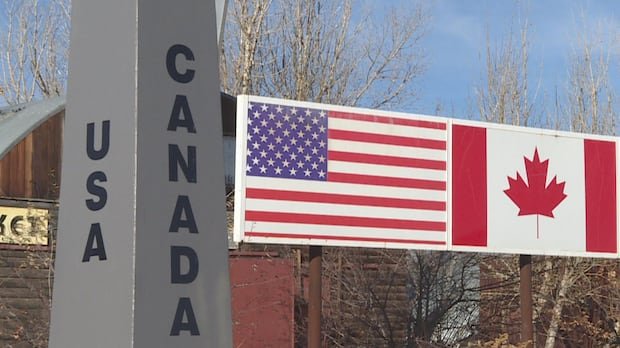

Roger Horgus, a wheat farmer from Sweet Grass Hills, Montana, has deep roots near the Canada-U.S. border. The well-kept 14-kilometer gravel road linking his community to Coutts, Alberta, is affectionately known as Border Road.
Growing up, Horgus and his family frequently crossed the border for visits, whether by bicycle, go-kart, or horseback, spending quality time with their Canadian friends. However, this casual travel tradition is soon to change due to a decision by U.S. President Donald Trump.
Starting on July 1, Canadians will face restrictions accessing Border Road, with a new gravel pathway being constructed on the Canadian side. While Canadians won’t be outright prohibited from driving on Border Road, they must first enter the U.S. at an official port of entry.
Expressing his discontent with the upcoming change, Horgus feels it is unfair and a breach of a prior agreement. He questions the necessity of building two separate roads and sees it as a waste of resources.
The closure of Border Road has sparked frustration among residents on both sides of the border. The road’s origin dates back to the Treaty of 1908, which prompted collaboration between Canada and the U.S. in modernizing boundary surveying techniques, leading to various border adjustments.
Even though Border Road is situated in Montana, its maintenance falls under Alberta’s jurisdiction. Alberta Transportation Minister Devin Dreeshen announced plans for modifications in 2026, with an allocated budget of $8 million to construct the new path. Construction is slated to commence in April, aiming for completion by summer.
Horgus criticizes the consultation process with residents, feeling that decisions were predetermined and that their opinions were merely token gestures. The road closure aligns with Trump’s border security strategy, aimed at preventing illicit activities like drug trafficking and illegal immigration.
While acknowledging increased security measures post-9/11, Horgus believes the current concerns are exaggerated. He advocates for community involvement in border security efforts and recounts instances where he and his family were mistakenly detained by law enforcement.
Despite the impending barriers, Horgus remains committed to maintaining his cross-border relationships and conducting business activities with his Canadian counterparts. He values the camaraderie shared with neighbors on both sides of the border, emphasizing the positive aspects of living in the region.