

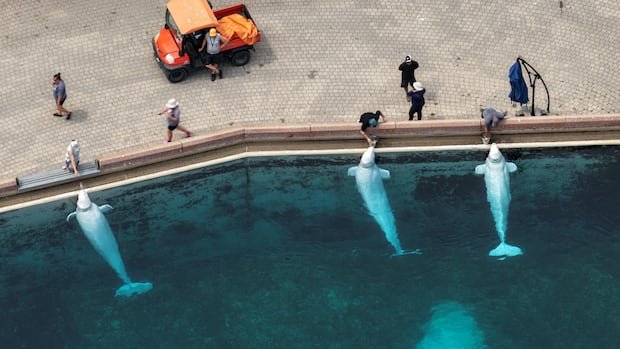

Earlier this month, a plan was authorized by the federal government to potentially relocate the 30 beluga whales residing at the now-closed Marineland in Niagara Falls, Ont., to new facilities abroad. Due to a 2019 law prohibiting the keeping of whales, dolphins, and porpoises for breeding or entertainment in Canada, the belugas are anticipated to be divided among an aquarium in Spain and four facilities in the United States.
Transporting these aquatic creatures, which can reach lengths of up to 4.5 meters and weigh over 1,900 kilograms, presents a significant challenge. While specific details from the destination aquariums overseeing the rescue operation are not yet available, insights from experts familiar with whale transportation shed light on the process.
Step 1 involves paperwork and preparation, including securing necessary permits from the Canadian government and the recipient countries. Decisions on each beluga’s destination, based on their individual characteristics and health assessments, are crucial before travel arrangements can proceed. Although Ottawa has provided initial approval, additional logistical steps and permits are required prior to the whales’ relocation, as stated by Johnny Ford, the vice president of communications at a potential destination, the Shedd Aquarium.
Step 2 emphasizes the importance of training and familiarizing the belugas with the equipment to be used for their transfer. Trainers invest months in acclimating the belugas to tools like custom-made slings and stretchers designed for lifting them from their tanks. Encouraging the belugas to interact with these devices before the journey helps build their comfort and cooperation.
On travel day, Step 3 involves lifting the belugas out of their tanks using slings and placing them into specially designed transport crates. These crates must provide enough space for the belugas to move comfortably while maintaining a suitable water level. Padding within the crate helps minimize external noise that could cause stress to the whales during transportation.
As the belugas embark on their journey, Step 3 continues with their transport by truck to a cargo plane, accompanied by a team of trainers and veterinarians. Continuous monitoring of the animals’ well-being, including their breathing and comfort levels, is essential throughout the flight. Pilots may adjust the altitude to ensure the belugas’ safety and comfort during transit.
Upon reaching their new destination, Step 4 involves unloading the belugas from the transport crates and transferring them to their respective aquariums. Quarantine measures are implemented to assess the belugas’ health and prevent the spread of diseases. Trainers may stay behind to share insights and behavior patterns of the belugas with the new caretakers.
Releasing the belugas into the ocean is not a feasible option due to the challenges of reintegrating them into their native habitats, particularly for belugas originating from Russia. Given their captivity-bred nature and social dependencies, these belugas lack the necessary survival skills to thrive in the wild, making their relocation to accredited facilities a more humane and viable solution.