

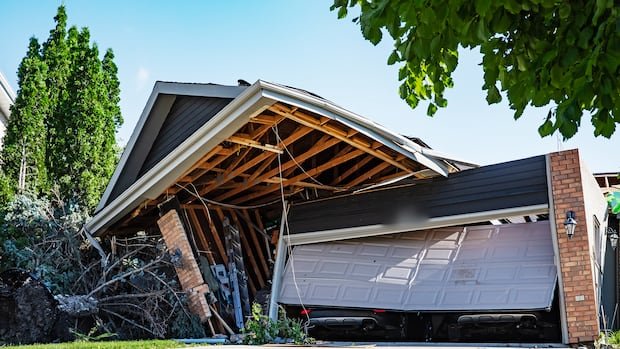

A severe storm struck Winnipeg on Monday evening, causing significant damage in the city’s southwest area, including a house partially collapsing. There is a possibility that a minor tornado hit the neighborhood, an uncommon occurrence in urban settings, as stated by an expert investigating the event.
According to John Hanesiak, an atmospheric science professor at the University of Manitoba collaborating with the Northern Tornadoes Project, the storms may have generated small tornadoes. Further assessment, potentially using drones, will be conducted to determine the extent of the damage and the strength of the winds involved.
The storm caused widespread destruction, including ripped-off shingles, damaged roofs, toppled fences, displaced items in yards, uprooted trees, and twisted metal structures. Residents in the affected Whyte Ridge neighborhood expressed shock at the aftermath, likening it to scenes typically seen in the U.S. due to tornado activity.
While tornadoes are more common in American cities, occurrences in Canadian Prairies are less frequent but still possible, according to Hanesiak. Fortunately, no injuries were reported in the affected area, with some homes escaping damage while others suffered property losses.
Local residents shared their experiences of the intense storm, emphasizing the need for community support in the cleanup and recovery efforts. The City of Winnipeg is assessing the storm’s impact, primarily focusing on tree damage, with forestry crews already engaged in mitigation efforts.
Meteorologists are still evaluating the storm’s intensity, with initial reports indicating strong winds exceeding 90 km/h. The damage could have been caused by either a tornado or straight-line winds, which are powerful non-rotating bursts known as downbursts.
Southern Manitoba has experienced a series of severe weather events recently, with storms affecting various regions and causing flooding in areas like Brandon. More rainfall is expected in western Manitoba, prompting Environment Canada to issue an orange-level rainfall warning for the region.
Despite ongoing severe weather conditions, there are expectations of a more stable and drier weather pattern approaching the weekend. The severe weather season typically extends from June to July, with potential for severe weather events to continue into early August.
The community is urged to remain vigilant and prepared for further weather challenges as the season progresses.