

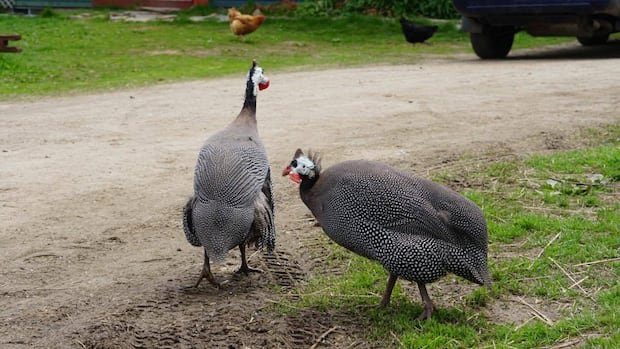

In Canada, the escalating presence of ticks has prompted more residents in Nova Scotia to seek solutions for safeguarding their properties. One unconventional ally gaining popularity is the guinea fowl, a distinctive bird known for its insect-devouring appetite. Heather Squires, a long-time guinea fowl breeder in Lunenburg, has seen a surge in demand this year, with inquiries doubling and sales temporarily halted to maintain adequate numbers for tick control on her farm.
Despite Nova Scotia being identified as having the highest tick population in Canada last year, the rise in tick-borne diseases like anaplasmosis has veterinarians concerned. The utilization of guinea fowl for tick management is not a novel concept, according to Bruce Rathgeber from Dalhousie University. While the effectiveness of guinea fowl in controlling ticks is up for debate, Rathgeber suggests they can complement other methods such as landscape maintenance to mitigate tick populations.
Breeding guinea fowl poses challenges due to their loud nature and difficulty in captivity. Phalen MacLean, a new guinea fowl breeder, highlights the birds’ nesting habits and some of their vulnerabilities, such as sleeping in trees during harsh weather. To address these issues, Squires recommends training the birds to return to a secure indoor space at night similar to chickens, emphasizing the importance of providing ample space for them to roam freely.
Both breeders stress the need for prospective guinea fowl owners to consider yard size and surroundings, particularly avoiding busy roads where the birds may be at risk. While guinea fowl may not be a standalone solution for tick control, they offer unique benefits such as targeted insect feeding without damaging vegetation.