


Economic expansion in Canada came to a halt in August for the second consecutive month, with signs of a potential downturn in September, according to data from Statistics Canada released on Friday.
The real gross domestic product remained largely unchanged for the month, following a period of minimal growth the previous month in July.
Ahead of the report, economists surveyed by Reuters had forecasted a growth rate of 0.2 percent for August.
Challenges arose in wholesale trade and within the public sector. In August, wholesale trade decreased by 1.4 percent, largely due to contractions across most subsectors. Notably, wholesalers of motor vehicles and parts saw a decline for the first time in seven months, as Statistics Canada indicated a drop in car manufacturing and a reduction in imported passenger vehicles.
The public sector, which encompasses areas such as education services, healthcare, and social assistance, also experienced a downturn. The completion of work related to the 2026 census significantly influenced the decline in government public administration activities.
While Canada’s economy has demonstrated resilience against challenging U.S. tariffs, fresh import bans on various Canadian goods are exerting additional pressure. Deloitte has revised its growth forecast for next year downward by 20 percent.
The mining, quarrying, and oil and gas sectors showed no growth, as an uptick in mining and quarrying activities was counterbalanced by a reduction in oil and gas output due to maintenance at several facilities.
Retail trade emerged as a positive aspect during the month, achieving a growth of 1.2 percent, effectively compensating for a decline in July.
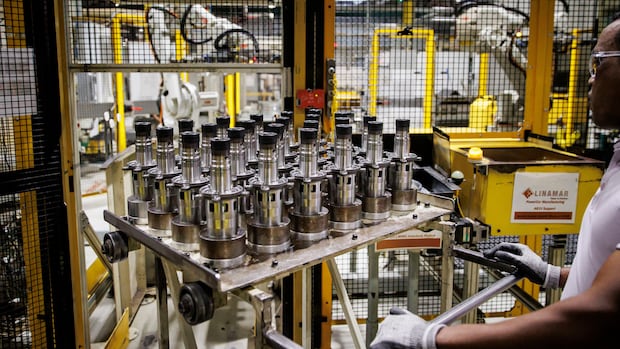
Manufacturing increased for the fifth time in the last seven months, while the transportation and warehousing sector also reported gains in August, alongside the finance and insurance industries.
Preliminary estimates from Statistics Canada for September indicate a 0.1 percent decrease in real GDP, attributed in part to losses in manufacturing and the mining, quarrying, and oil and gas extraction sectors.
This slowdown in September, combined with stagnant growth in July and August, suggests a recent trend of economic weakness, as noted by Doug Porter, chief economist at BMO.
“The momentum that seemed to be building in the spring months has dissipated, which the Bank of Canada highlighted as evidence of the economy’s strength,” Porter remarked in a note, referencing the economic activity discussed when the central bank raised interest rates earlier this week.
Porter suggested that some of the perceived weakness might be “overstated,” due to the one-time drop related to the census. However, he pointed out that the ongoing trade war and declining job numbers in recent months provide clear indicators of the economy’s struggle to grow.
Despite the lack of growth in July and August and indications of a downturn in September, the agency’s initial estimates still project a 1.3 percent annualized expansion in real GDP for the third quarter, a decrease from the 3.3 percent growth recorded in the previous quarter.
However, this is below the two percent growth that the Bank of Canada had anticipated for the third quarter in its monetary policy report published on Wednesday.
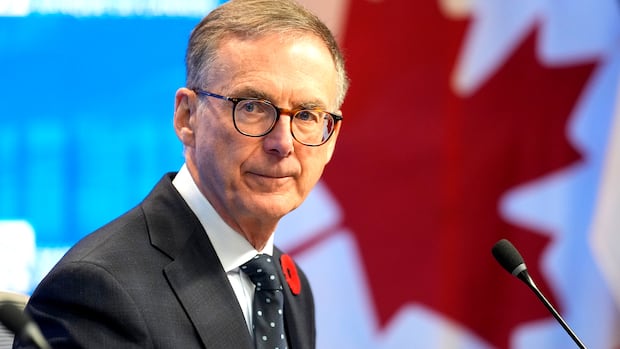
Following nearly a year of stable interest rates, the Bank of Canada has elevated its policy rate to 2.5 percent. Governor Tiff Macklem stated that the increase was essential to combat inflation spurred by rising energy costs.
CIBC economist Andrew Grantham noted that although the bank had already anticipated some slowing in the fourth quarter of 2026, the latest data suggests that the economic momentum leading into that period may be weaker than initially expected.
“There is still more data to be released before the December meeting,” Grantham mentioned in a note to investors. “However, the current data supports the notion that the bank may refrain from raising interest rates further for the time being.”
This week, the central bank increased its key lending rate by a quarter-point to 2.5 percent. While some economists speculate that this could signal the beginning of a series of rate hikes, others believe the bank might maintain the rate at 2.5 percent while assessing the need for additional adjustments.