

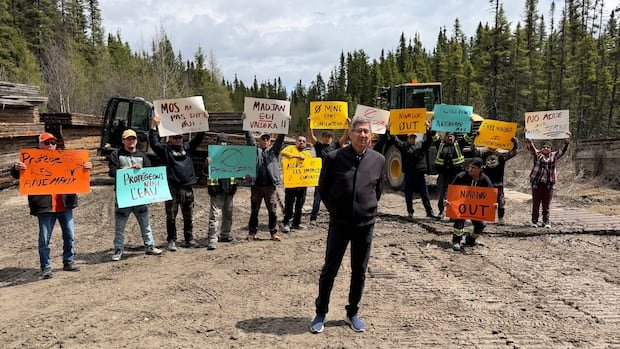

In Quebec’s Abitibi-Témiscamingue region, plans for a new multi-pit gold mine in an area of the boreal forest previously impacted by mining activities have raised concerns among members of the nearby Anishinaabe First Nation. Community members recently gathered at the proposed project site on ancestral land near Lac-Simon, demanding a halt to exploratory work. Signs were displayed expressing opposition to the project and highlighting environmental worries.
Chief Lucien Wabanonik of the Lac-Simon Anishinaabe Nation stated in a phone interview that the community was not properly consulted and did not consent to the large-scale open-pit mining project. The Novador project, acquired by Fresnillo, is touted as one of Canada’s top undeveloped projects, with an anticipated significant annual gold production over a 12.6-year mine life.
The project, which aims to create 550 jobs and includes infrastructure such as an ore processing plant and access roads, could impact the local environment, including the watershed and at-risk species like woodland caribou. The consultation process between the company and affected communities has been criticized as inadequate, with concerns raised about the lack of meaningful dialogue and decision-making power given to communities.
Legal experts and advocates argue that the current regulations in Quebec surrounding mining activities lack adequate safeguards for community input and environmental protection. Despite community opposition and concerns, the company has received authorization for exploratory work, leading to fears that once exploration starts, it becomes challenging to halt the project. The Anishinaabe community is contemplating legal action if their objections are not addressed.
Quebec’s Ministry of Natural Resources and Forests confirmed granting a permit for exploratory work and stated that further consultations will occur if the project progresses towards active mining operations. Fresnillo has expressed readiness to engage in dialogue with community representatives and address their concerns. However, the project proposal document indicates that an open-pit mine is the only viable option, a stance that conflicts with the community’s preferences, potentially leading to a legal battle.