

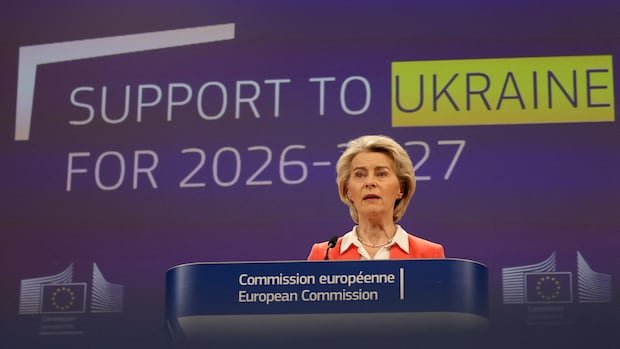

European Union ambassadors have given their approval for the release of a 90 billion euro loan to Ukraine, along with a fresh set of sanctions against Russia. This decision came after Hungary withdrew its objection. The loan agreement is expected to be formally endorsed by all 27 EU member states by Thursday afternoon.
The loan, agreed upon last year, aims to support Ukraine financially until 2026 and 2027. Hungary had initially resisted signing off on the deal, citing concerns over Ukraine’s handling of a pipeline crucial for Russian oil transit. This disagreement had also delayed the implementation of new sanctions against Russia, which were intended to commemorate the fourth anniversary of Russia’s full-scale invasion of Ukraine in February 2022.
The impasse was resolved when Hungary’s MOL oil group confirmed that the Ukrainian operator of the Druzhba pipeline was ready to resume crude oil transit to Hungary and Slovakia. Shipments are anticipated to reach these countries by Thursday. Both Hungary and Slovakia heavily rely on Russia for their energy needs.
Following a recent change in leadership in Hungary, with Peter Magyar set to assume power next month, the obstruction to the EU funds for Ukraine is expected to be lifted. The EU had initially faced opposition, particularly from Hungary, regarding the idea of joint EU borrowing against the EU budget. However, Hungary, Slovakia, and the Czech Republic eventually agreed to proceed with the scheme after reassurances that it would not have adverse financial implications for them.
The interest-free loan is intended to cover a significant portion of Ukraine’s financial requirements for the next two years, with a focus on military and general budget needs. Repayment of the loan is contingent upon Russia’s payment of war reparations post-conflict.
Frozen Russian central bank assets in the EU, amounting to approximately 210 billion euros, could potentially be utilized for repayment. The EU anticipates that other supportive developed countries will contribute the remaining funds, already pledged for 2026, to aid Ukraine.
The loan scheme was devised to leverage the frozen Russian assets effectively without outright confiscation, a measure deemed legally risky. Brussels is hopeful that other sympathetic nations will also step in to assist Ukraine financially.