
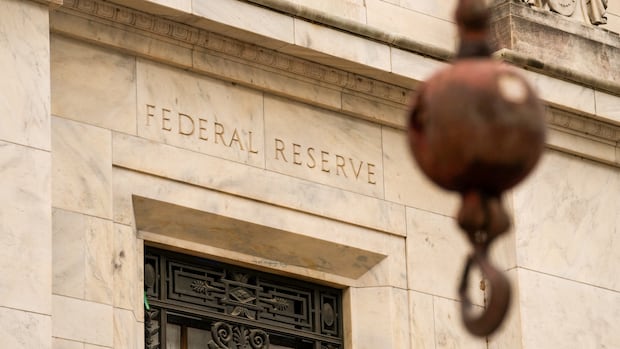

On Wednesday, the Federal Reserve decided to maintain interest rates, although officials are anticipating an increase in borrowing costs later this year due to rising inflation concerns that exceed the central bank’s two percent target.
Recent quarterly forecasts revealed that nine Federal Reserve officials now expect a rate hike by the end of 2026, while an updated policy statement eliminated previous indications suggesting possible further reductions in borrowing costs this year.
The statement, reflecting an early indication of new Fed chairman Kevin Warsh’s impact, omitted any guidance regarding future rate movements, instead presenting a simplified format that merely reported the rate decision and reiterated the central bank’s commitment to maintaining “ample reserves in the banking system.”
This streamlined document, reminiscent of the format used by former Fed chairman Alan Greenspan, received unanimous approval from the central bank’s federal open market committee with a 12-0 vote.
The statement exhibited additional signs of Warsh’s early influence on the discussions, as he steps into his role following his appointment earlier this year by U.S. President Donald Trump, who expects him to implement the rate cuts he has called for.
The economic assessment noted key issues emphasized by Warsh, stating that “productivity growth and capital investment are strong.” It also recognized that inflation remains “elevated relative to the committee’s two percent goal,” attributing this situation partly to “supply shocks that have led to price increases in specific sectors, including energy.”
New forecasts indicate a significant slowdown in inflation next year, which would allow rates to return to their current levels by the end of 2027 and decrease modestly further in 2028.
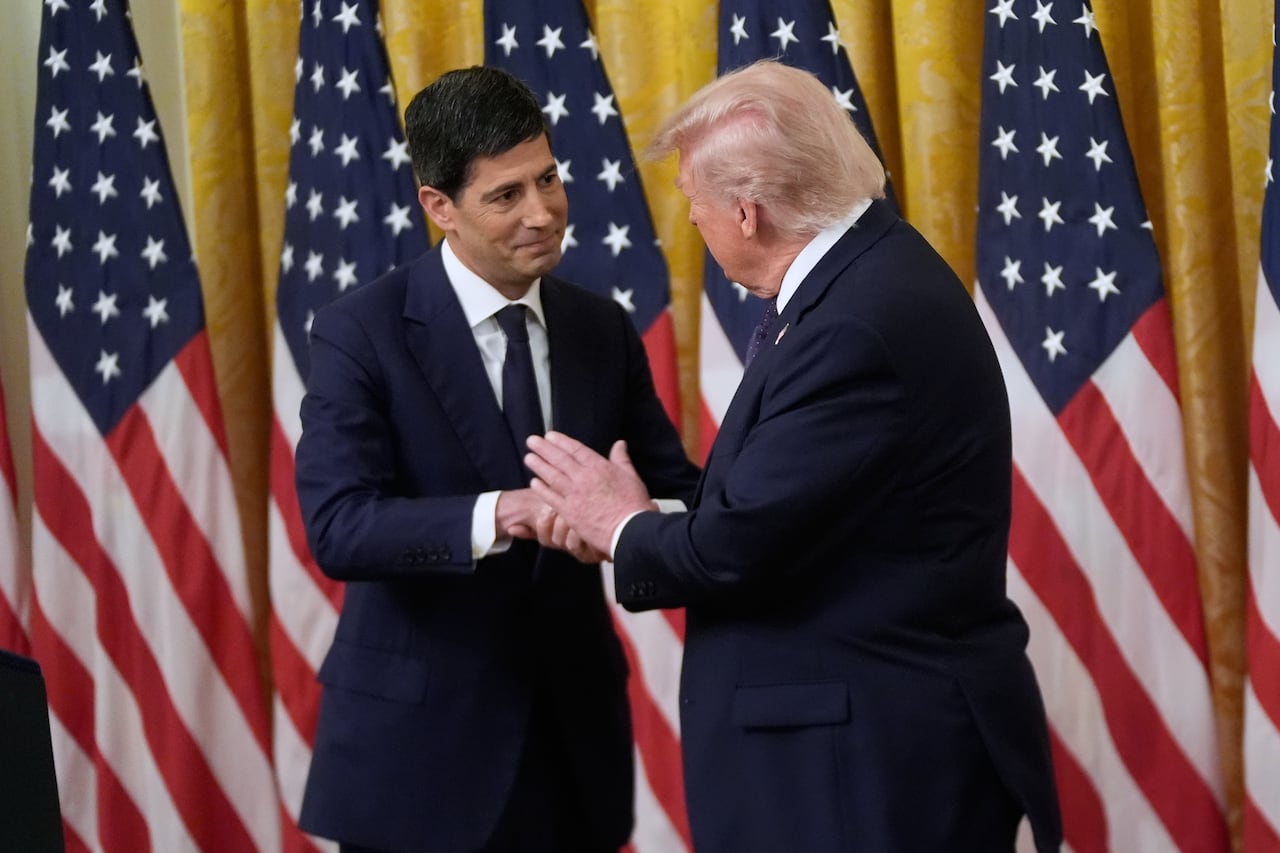
U.S. President Donald Trump, right, converses with Kevin Warsh, left, who took office as chairman of the Federal Reserve on May 22 in Washington, D.C. (Manuel Balce Ceneta/The Associated Press)
“The committee will ensure price stability,” the statement affirmed.
Following the release of the policy statement and projections, Treasury yields increased. U.S. stocks experienced a slight decline, while the U.S. dollar gained value against a range of currencies. Futures for short-term interest rates are now indicating a higher probability of a rate hike by September compared to holding rates steady.
Out of 19 policymakers, only 18 provided rate projections for the Fed’s “dot-plot” chart, and although the missing “dot” cannot be identified, it is believed to have been withheld by Warsh, who has only recently assumed his position and has voiced criticism regarding the quarterly Summary of Economic Projections.
This statement signifies a shift not just in the leadership of the central bank but also in a monetary policy outlook that, since the fall of 2024, was oriented towards reducing borrowing costs from the elevated rates implemented to curb inflation that reached 40-year highs during the COVID-19 pandemic.
-
Trump names former Fed official turned critic Kevin Warsh as his pick for next chair
-
Bank of Canada keeps key interest rate at 2.25% as it tries to balance competing economic risks
Officials’ projections indicated that the policy interest rate, which has remained in the 3.5 percent to 3.75 percent range since last December, is expected to increase by a quarter of a percentage point by the end of this year.
The inflation forecast for the end of 2026 was revised upward to 3.6 percent from 2.7 percent, with expectations that it will drop to 2.3 percent next year—all without a rate increase—aligning with the statement’s language that attributes high prices to supply disruptions that are typically expected to resolve.
Economic growth projections were slightly downgraded, with the unemployment rate anticipated to finish the year at 4.4 percent, consistent with the Fed’s projections from March.