
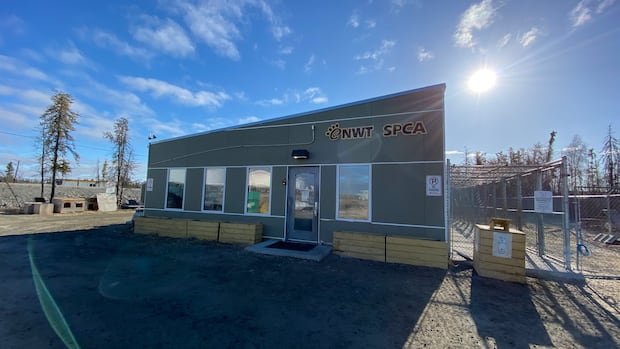

The N.W.T. SPCA is urging the territorial government to reconsider officially acknowledging domestic animals as sentient beings rather than mere property. In accordance with the Dog Act, which governs the obligations of dog owners and the enforcement thereof in the Northwest Territories, dogs are classified as the property of their owners. One provision in the act allows for the sale or transfer of ownership of a dog to another individual if the owner is detained.
The SPCA has received numerous complaints from both visitors and residents regarding the welfare and conditions of animals in the region over the years. They argue that the existing legislation restricts authorities’ ability to intervene effectively and in a timely manner.
Nicole Spencer, the executive director of the N.W.T. SPCA, highlighted that the current laws set basic standards like food, water, and shelter, which may not address more complex animal welfare issues that arise.
Jennifer Friedman, an animal welfare lawyer from Toronto, noted that pets are commonly viewed as property, or chattel, in Canada, including in Ontario. However, some provinces, such as British Columbia in 2024, are beginning to expand legal considerations for pets in family disputes like divorces.
The Department of Municipal and Community Affairs, responsible for administering the Dog Act, stated that there are no immediate plans to revise the legislation. The Minister, Vince McKay, emphasized that municipalities hold the responsibility for managing their animals based on their specific needs and capabilities.
McKay acknowledged the need for potential updates to the Dog Act, which has not been revised for over a decade, but emphasized the importance of balancing legislative priorities. He emphasized the significance of establishing a foundational document to safeguard communities lacking the resources to create bylaws for animal protection, while also allowing communities the flexibility to enact stricter regulations if desired.