

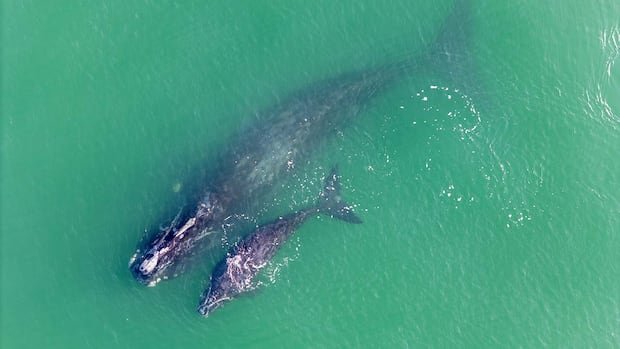

Researchers studying North Atlantic right whales on both sides of the border are expressing cautious optimism following an increase in the number of new calves born this year. The calving season from November to April in the southeastern U.S. saw the birth of 23 calves, marking the highest number since 2009.
Amy Warren, a scientific program officer at the New England Aquarium’s Anderson Cabot Center for Ocean Life, described the 23 calves as a hopeful sign. However, she emphasized the importance of these calves surviving into adulthood to contribute to the endangered population of North Atlantic right whales, which currently stands at only 380 individuals.
The reasons behind the surge in calving this year remain uncertain, with researchers pointing to the health of the mothers as a significant factor. The availability of food, particularly the specific plankton that North Atlantic right whales feed on, plays a crucial role. Climate change has been shifting their food sources further north, leaving the whales without sufficient nourishment in their calving grounds off Florida and Georgia.
Various human-induced stressors such as ocean noise, ship traffic, vessel strikes, and entanglements in fishing gear can also impact the well-being of these whales. Conservation efforts in Canadian and U.S. waters, including fishery closures and speed restrictions for marine vessels, have been implemented to protect the North Atlantic right whales.
In addition to the increased number of calves born this year, some mothers displayed shorter intervals between giving birth to their previous offspring and this year’s calves. This positive trend is seen as a potential boost to the population growth of these whales.
While this year’s baby boom is a welcome development, researchers stress that sustained efforts are needed to reverse the decline in the population of North Atlantic right whales. Moving forward, continued conservation measures and monitoring will be crucial in ensuring the long-term survival of this critically endangered species.