

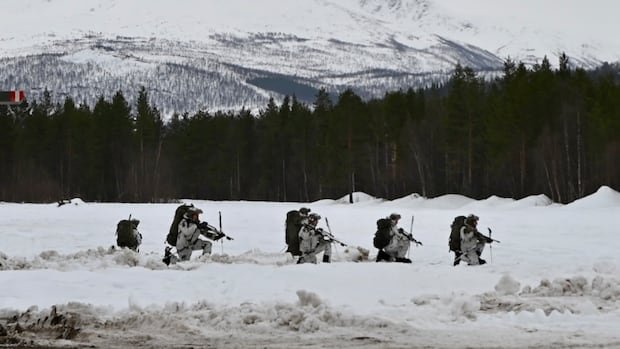

In defense circles today, there is a prevailing focus on the Arctic region, marked by a sense of urgency. The protection of this area has become a key priority for Canada and NATO as a whole. The heightened attention can be partly attributed to U.S. President Donald Trump’s expressions of interest in Greenland and associated security concerns related to critical resources.
The Arctic, especially Canada’s North, has historically received insufficient security attention. Even notable figures like former NATO secretary general Jens Stoltenberg, who emphasized the vulnerability of the United States to Arctic threats, have not fully sparked interest and action within the country and the alliance.
With Russia actively engaging in “grey zone” warfare in Europe and persistent concerns about Arctic security, NATO has initiated the Arctic Sentry program. This initiative, crafted by Canadian delegates at NATO in collaboration with the U.K., aims to consolidate various training and surveillance activities under one strategic framework.
Challenges in Arctic defense range from Icelandic air patrols to sub-surface threats faced by submarines, highlighting the steep learning curve and diverse obstacles in safeguarding this remote and harsh environment. Maintaining situational awareness in the Arctic poses a significant challenge due to the vast territory and limited sensor coverage.
Key concerns include Russian ambitions in the Arctic, with Moscow viewing the region as crucial to its global power projection. The Arctic serves as a strategic gateway, necessitating increased vigilance and preparedness against potential threats, particularly from Russian military assets.
NATO’s efforts to enhance drone capabilities in the Arctic lag behind those of Russia and China, underscoring the need for technological advancements and improved surveillance capabilities. Additionally, conducting ground combat operations in extreme Arctic conditions presents a complex challenge that military planners are actively addressing.
As Canada expands its Arctic infrastructure and military presence, the focus shifts to developing operational strategies for potential threats originating from the Arctic region. Investments in over-the-horizon radar systems and modern submarines capable of operating in icy waters are central to bolstering Canada’s Arctic defense capabilities.
Overall, the evolving landscape in the Arctic underscores the necessity for proactive security measures, technological advancements, and international cooperation to safeguard this strategically significant region.