

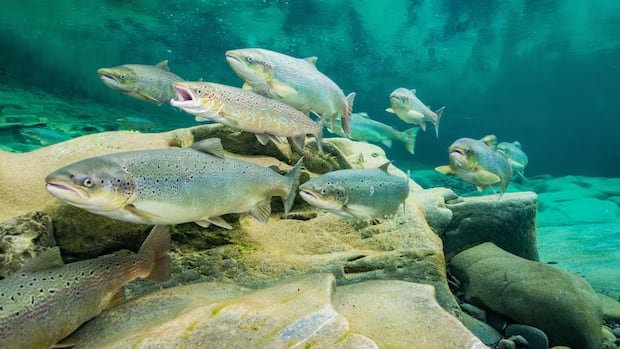

A dispute has emerged in Atlantic Canada involving salmon farming. The conflict pits fish farmers, who rear salmon in ocean pens, against the Atlantic Salmon Federation, a conservation group. Central to the disagreement is the allocation of over $80 million in new federal funding.
The Atlantic Canada Fish Farmers Association, represented by Tom Taylor, publicly expressed its opposition to the Atlantic Salmon Federation receiving any portion of the new $81.7 million federal fund aimed at stabilizing and restoring wild Atlantic salmon populations. Taylor labeled the federation as a “foreign-funded, activist organization” that aims to harm the region’s farmed salmon industry by disseminating misleading information discouraging the consumption of farmed salmon.
On the other hand, the Atlantic Salmon Federation, through its vice-president of communications, Neville Crabbe, defended its stance against the negative environmental impacts of farmed salmon. Crabbe emphasized the federation’s role as a wild Atlantic salmon conservation group and its long-standing critique of the industry’s ecological consequences.
The federation, having secured additional funding from private sources, emphasized the importance of wild Atlantic salmon as a crucial species for maintaining healthy river ecosystems and supporting local economies and cultural heritage in the region. Meanwhile, fish farmers argue that their industry is a lawful and vital part of Atlantic Canadian economy, pointing to collaborative conservation efforts such as the Fundy Salmon Recovery program involving various stakeholders.
Furthermore, while a ban on open net-pen salmon farming in British Columbia has been announced, concerns about potential pressures to curtail offshore fish farming in Atlantic Canada persist. As both sides stand firm in their positions, the dispute remains ongoing, with hopes for a resolution that addresses the concerns of all involved parties.