

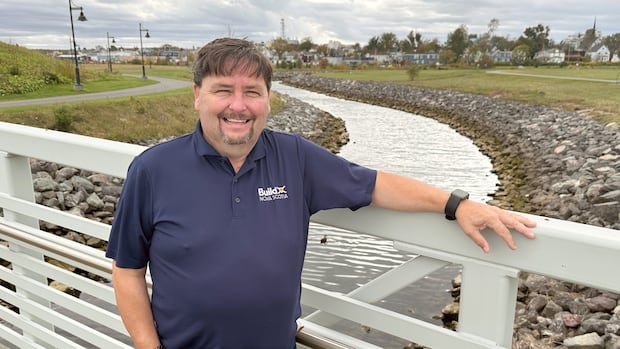

Fish have been spotted returning to the streams surrounding the former tar ponds and coke oven locations in Sydney, N.S., which officials consider a promising development following the cleanup of a century’s worth of industrial activity in Cape Breton’s steel and coal sectors.
The Sydney Tar Ponds Agency oversaw the $400-million cleanup, which has since been integrated into Nova Scotia Lands and is now managed by Build Nova Scotia, the agency responsible for overseeing water quality in the streams that flow through the old industrial areas.
According to Donnie Burke, a senior director at the agency, an independent engineering firm has confirmed that the remediation measures are yielding positive results.
“So far, all indicators show stability or improvement, which is fantastic,” he remarked during a recent site visit.
The land from the coke ovens was covered with residual slag from the previous steel production, and the infamous tar ponds, adjacent to the coke ovens and once labeled as Canada’s most hazardous waste site, have been sealed with concrete.
Cleanup efforts also included Coke Ovens Brook, Wash Brook, and Muggah Creek, with the surrounding areas landscaped to manage surface water flow into the streams. Additionally, groundwater from the coke ovens is processed at a treatment facility before being released back into the brooks.
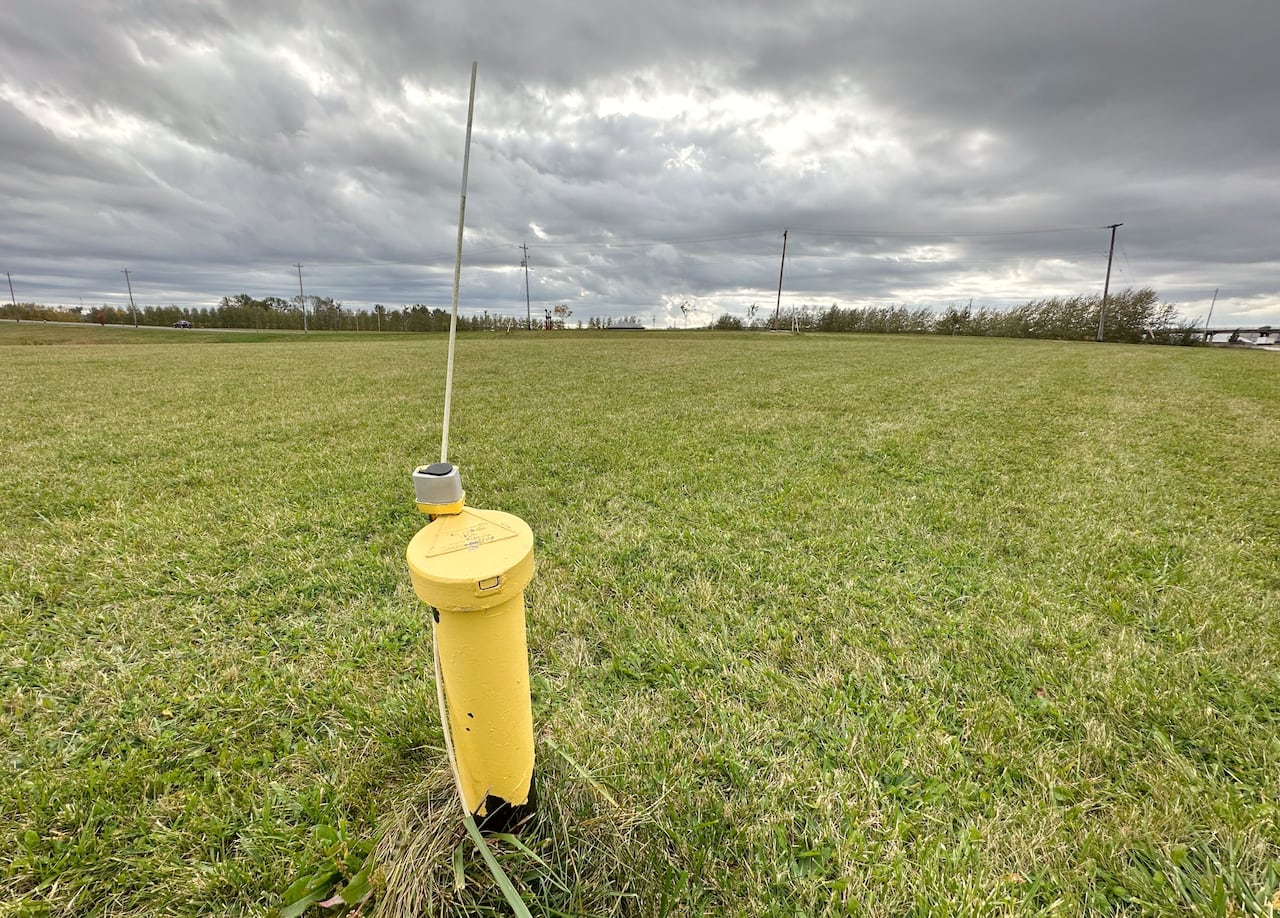
One of several well heads is seen on the former coke ovens site, providing access to test for industrial toxins in groundwater. (Tom Ayers/CBC)
Both locations have been topped with soil and grass.
The previous tar ponds are now referred to as Open Hearth Park, which features football and soccer fields, a playground, walking paths, and open areas.
The coke oven site has transformed into an open field used for activities such as cricket, walking, and snowmobiling during the winter months.
Burke mentioned that water tests indicate the cap over the tar ponds is successfully preventing any toxin release.
While the former coke ovens site occasionally shows spikes in heavy metals or industrial chemicals, typically following heavy rainfall, the monitoring system captures these fluctuations, allowing for adjustments in the water treatment process.

The Build Nova Scotia office in Sydney is located in Harbourside Industrial Park on reclaimed land situated between the former coke ovens and tar ponds sites. (Tom Ayers/CBC)
“There are many minor variations,” Burke commented. “We notice slightly more fluctuation, but overall, conditions have remained stable or improved since the cover was applied.”
Water is routinely tested in the brooks and beneath the cap of the former coke oven site through a network of wells positioned across the locations.
A recent study conducted by Cape Breton University revealed that a small fish species has returned to the brooks, and Burke noted that provincial staff recently discovered trout eggs and fry in Coke Ovens Brook.
“Who would have imagined that trout would thrive here 20 years ago?” he remarked.

Dr. Katherine Jones, a CBU biologist, says mummichog fish living in the former tar ponds displayed bone and fin abnormalities, but lately, their health has improved. (Tom Ayers/CBC)
Katherine Jones, a biology professor at CBU, had previously studied mummichogs suffering from health issues in the tar ponds before the cleanup took place.
Last year, she oversaw a pilot study conducted by fourth-year student Hannah MacKinnon to assess whether the fish’s health had improved. Jones indicated that MacKinnon found that previously observed symptoms had vanished.
“We no longer observed fin rot, fin erosion, or bone abnormalities, so overall, the health of these fish appears to be significantly better compared to before the remediation,” she stated.
‘Trending in the right direction’ — Burke
Jones mentioned that further studies are necessary to ascertain whether local fish are still impacted by the remediated industrial sites, and she hopes to analyze their DNA to determine if they are descendants of the former fish population or if they have migrated from other areas.
Burke noted that the government intends to monitor the sites for 25 years following the cleanup, with results being regularly updated on Build Nova Scotia’s website.
The monitoring process is currently about halfway through, and “everything seems to be trending positively,” he added.
MORE TOP STORIES
-
Druhan releases campaign document that could be ‘foundation’ for election platform
-
New N.S. chief medical officer of health named as Dr. Robert Strang to retire
-
Former Halifax Alehouse building recommended for heritage status
-
Nova Scotia university enrolment continues to drop, new statistics show
-
Scam targeting minor hockey teams with fake invite for real tournaments, group warns
Tag: rewrite-pending