

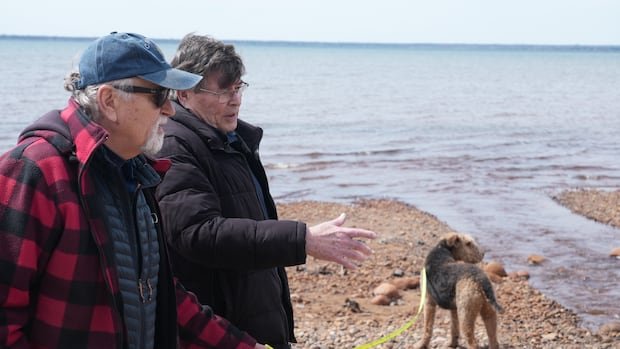

Peter Gagnon has raised concerns about the safety of allowing his grandchildren to swim in the St. Marys River near Sault Ste. Marie, Ontario, due to potential contamination from decades of chemical runoff originating from the airport.
Gagnon, along with his neighbor Rick Gartshore, are particularly worried about the presence of per- and polyfluoroalkyl substances (PFAS) in the Pointe Des Chênes area of the city. PFAS are a group of over 10,000 synthetic chemicals known for their long-lasting nature and resistance to various environmental conditions such as heat, water, and oil.
These chemicals, often referred to as “forever chemicals,” can be found in a variety of products including certain cosmetics, takeout containers, non-stick cookware, and waterproof garments. Studies suggest that exposure to certain PFAS compounds may lead to adverse health effects such as reproductive, developmental, endocrine, liver, kidney, and immunological issues in both animals and humans.
One specific type of PFAS, perfluorooctanoic acid (PFOA), has been classified as potentially carcinogenic to humans by the International Agency for Research on Cancer.
The use of PFAS-containing firefighting foams during training exercises at airports across Canada has been identified as a significant contributor to environmental contamination. The persistent nature of these chemicals has resulted in groundwater contamination in several communities, including North Bay, Ontario, where PFAS from firefighter training sites infiltrated the municipal drinking water source.
In Sault Ste. Marie, concerns have been raised about the contamination stemming from the firefighter training area established by Transport Canada at the airport in 1964. The use of firefighting foams containing PFAS continued at this site until 1992. Tests conducted by the Ontario Ministry of the Environment in 2015 confirmed the presence of PFAS in the well water and surrounding groundwater at the Pointe Des Chênes campground south of the airport.
Private wells near the airport have also been found to be contaminated with PFAS, with some homes recording levels exceeding Health Canada’s drinking water guidelines. Transport Canada has taken steps to install PFAS filtration systems in affected properties to mitigate health risks associated with PFAS exposure.
Despite these findings, the City of Sault Ste. Marie has assured the public of the safety of its municipal drinking water system, stating that the contamination issue is specific to the groundwater in the airport vicinity and does not affect the city’s main water source from Lake Superior.
The issue of PFAS contamination is not limited to Sault Ste. Marie but extends to various communities across Canada, highlighting the broader environmental and health concerns associated with these persistent chemicals.