

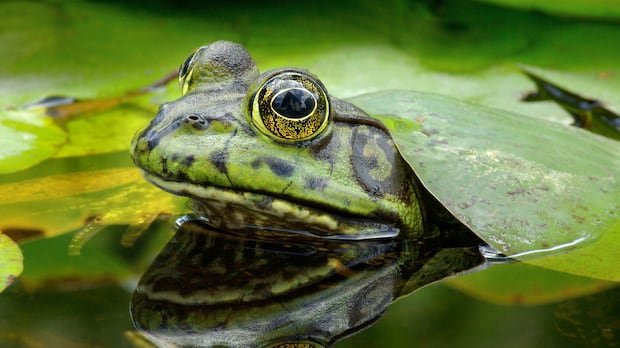

A coalition of locals in the Comox Valley on central Vancouver Island is banding together to eliminate non-native American bullfrogs from nearby lakes and waterways. The Tsolum River Restoration Society is launching workshops this weekend to assist individuals in setting up traps for bullfrog tadpoles, citing the significant threat these large frogs pose to indigenous species.
American bullfrogs, known to be twice the size of other frog species in B.C., have a varied diet that includes frogs, salamanders, insects, and even small mammals and reptiles, as mentioned by the Invasive Species Council of B.C.
One resident has taken on the responsibility of monitoring the tadpole traps he deployed in Maple Lake, just north of Cumberland, every other day, in a bid to safeguard fragile ecosystems. Bruce Moffat, a society volunteer, initially adopted a “live and let live” approach upon encountering bullfrog tadpoles a few years back. However, after stumbling upon a proliferation of invasive bullfrog tadpoles during a canoe trip at Maple Lake last year, his perspective shifted towards active intervention.
Moffat emphasized the detrimental impact a thriving population of American bullfrogs could have on local amphibians, fish, and insects, ultimately affecting birds and larger species. The Invasive Species Council of B.C. warns that the voracious appetite of bullfrogs poses a serious threat to endangered species like the northern red-legged frog and the western painted turtle.
Gail Wallin, the executive director of ISCBC, highlighted the prohibition against relocating bullfrog tadpoles or mature frogs to new areas, stressing that the species are firmly established in B.C. Despite the difficulty of eradicating them entirely, Wallin encouraged efforts to manage their numbers, advocating for documenting their activities as a crucial step.
The resident-led tadpole traps set up in the Comox Valley are expected to yield short-term results in controlling local bullfrog populations, necessitating ongoing community involvement to maintain population levels. The Tsolum River Restoration Society is hosting workshops to educate residents on constructing and using tadpole traps, aiming to empower locals to implement these measures on their properties and in public spaces with proper authorization.
Katie Gair, the society’s project coordinator, underscored the importance of recognizing the distinctive features of bullfrog tadpoles, such as their large size, cream-colored bellies, and green speckles, as a means to differentiate them from native species. Gair emphasized that removing bullfrogs is just one component of a comprehensive strategy to safeguard local wildlife.