

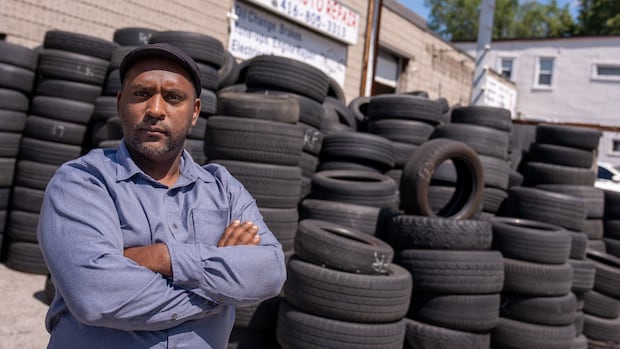

A Scarborough auto repair shop proprietor claims that the city has instructed him to remove over a thousand scrap tires or face penalties. However, he is struggling to find anyone willing to pick them up due to recent changes in provincial tire recycling regulations.
Seid Sayed, who runs Flame Auto Repair on Kingston Road, mentioned that he received an email from the city’s municipal licensing and standards division stating he had until Thursday to dispose of the tires, which are stacked both inside and outside his shop.
Sayed was informed that he could request an extension, but he has been unable to secure a commitment from a producer responsibility organization (PRO) for tire pickup. PROs are responsible for contracting haulers and recyclers to collect and process tires.
“This isn’t a landfill; this is a small private business,” Sayed remarked while standing in front of a substantial pile of tires on his property. “It’s not just an eyesore; it’s also a safety risk.”
Since 2019, tire manufacturers in Ontario have been accountable for recycling on an individual basis, although they can delegate their recycling responsibilities to PROs.
In January 2025, the Ontario government reduced the collection targets for used tires, now requiring tire producers to recycle only 65 percent of the used tires collected by weight, down from 85 percent. Additionally, the number of collection sites mandated in the province has been cut.
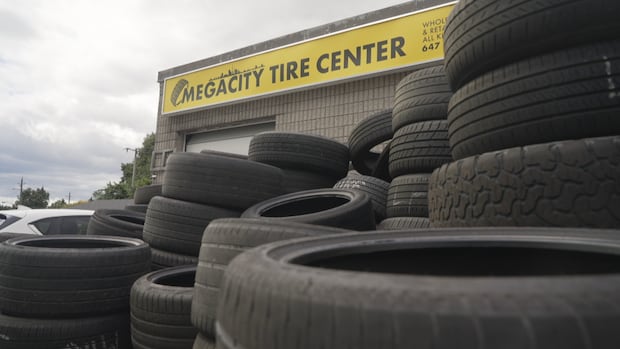
Across Toronto, mechanics and tire depots are sounding the alarm over a growing backlog of used tires piling up in front of their shops. CBC’s Ali Chiasson has more on what they say is to blame, and how they’re paying the price for it.
A PRO that previously collected Sayed’s tires bi-monthly has not made a pickup in about seven months, according to him.
Sayed has contacted a PRO three times but has only been told to wait. He also reached out via email to two Ontario MPPs but has yet to receive any reply. Furthermore, city regulations prevent him from taking the tires to a municipal landfill.
“I regret having to leave the tires here, but I have no other option,” he stated.
City will take into account actions made to comply with bylaws
Paul Di Salvo, director of regulatory compliance and enforcement for the city, stated in a recent announcement that the city is aware that some businesses are encountering difficulties in disposing of scrap tires.
“While we acknowledge these challenges, large tire accumulations can create environmental, health, and safety issues, including fire risks and pest infestations,” Di Salvo explained.
He noted that when deciding on the appropriate course of action, the city will consider the efforts made by property owners to resolve bylaw issues.
In this instance, the city has only issued a warning and has not imposed a fine.
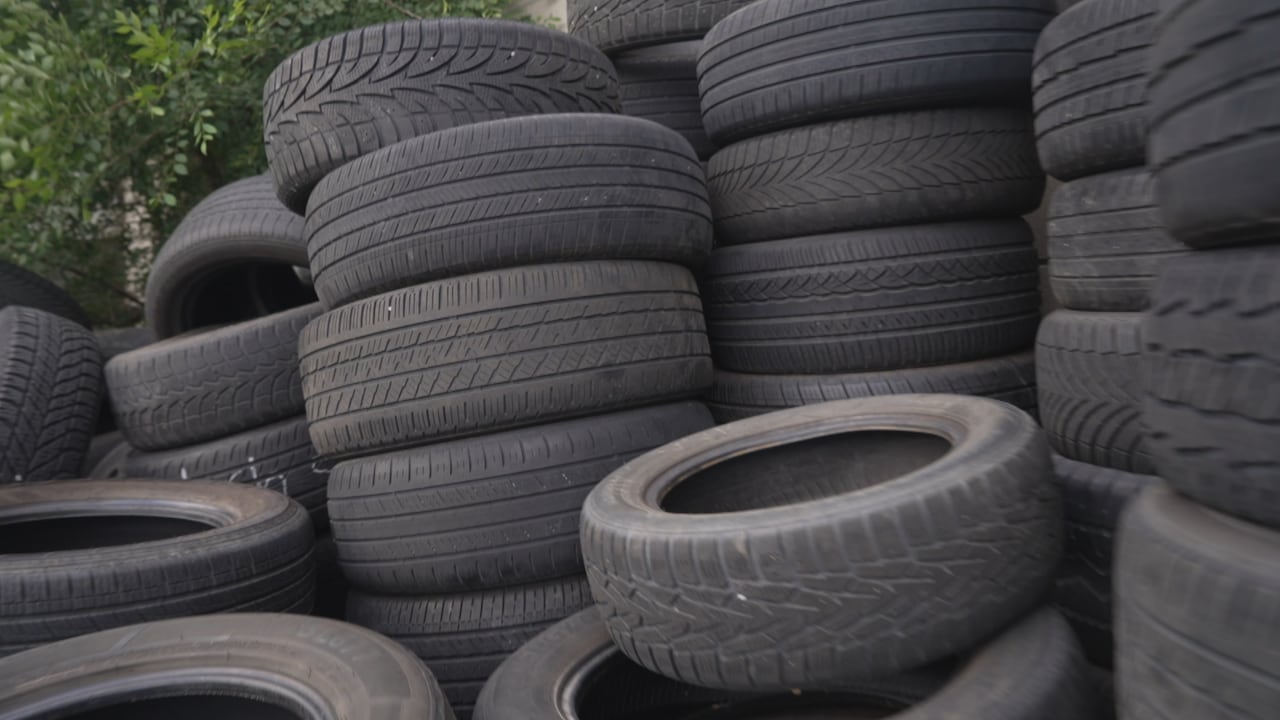
A pile of used tires is shown here. In January 2025, the Ontario government reduced collection targets for used tires. Tire producers are now required to recycle only 65 percent of used tires collected by weight, rather than 85 percent. The government also reduced the required number of collection sites in the province. (Mark Bochsler/CBC)
Peter Tabuns, the provincial NDP critic for the Ministry of the Environment, has stated that the province’s regulatory changes have resulted in an excess of tires, which some PROs claim they are neither obliged nor economically motivated to process.
-
Ontario aims to prevent tire stockpiling. Critics argue it needs to revert its recycling target changes
-
Hundreds of thousands of used tires accumulating after Ontario cuts recycling targets
The Resource Productivity & Recovery Authority (RPRA), the provincial regulatory body, has indicated that tire producers must continue to recycle tires from their collection sites, regardless of whether the targets are met.
Growing concern over tire stockpiles, expert states
Adam Moffatt, executive director of the Ontario Tire Dealers Association, expressed on Thursday that the issue of tire stockpiles is becoming increasingly alarming.
“Unfortunately, we are likely experiencing more tires backlogged in the system right now than we did at the end of last year,” he remarked.
“We receive daily inquiries from numerous tire dealers and collection sites throughout the province who are facing environmental challenges,” he added. “These businesses are not being offered any practical means to dispose of these tires.”
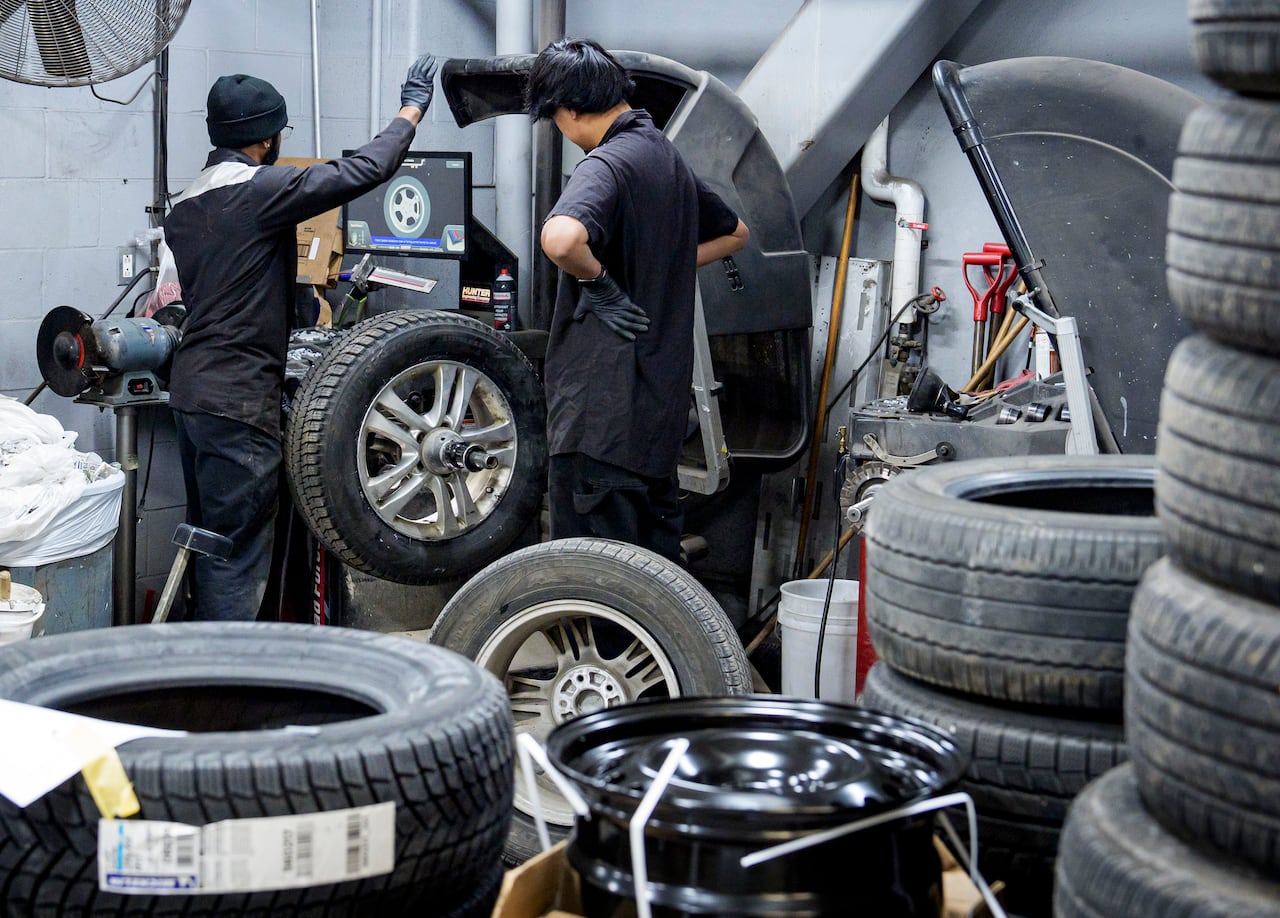
A mechanic prepares winter tires at a garage in the Greater Toronto Area on Nov. 11, 2025. (Evan Mitsui/CBC)
If regulatory changes are not made this year, a significant increase in tire surplus is anticipated by the end of 2026.
“I would estimate that we might have three to four million excess tires by the end of this year. And where will we store these tires?”
Ministry expects producers to manage used tires
This week, Ontario’s Ministry of the Environment stated that it expects producers and PROs to manage all end-of-life tires as they become available.
Spokesperson Gary Wheeler mentioned that the ministry recently conducted a 30-day consultation on proposed adjustments to tire regulations and is considering all responses to determine the next steps.
Wheeler added that the RPRA “is overseeing the system to ensure that tire producers and PROs comply with current regulatory obligations.”
“Collection sites can reach out to registered tire PROs, haulers, and processors to see if any of them can assist with the backlog of tires,” he concluded.