

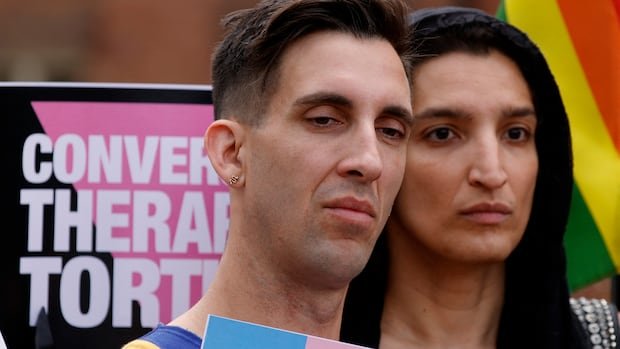

The U.S. Supreme Court has recently ruled that prohibiting conversion therapy for minors violates free speech rights. Despite this decision, a survivor of conversion therapy emphasizes that such bans are crucial to safeguarding vulnerable youth from significant, and at times, fatal harm.
In an 8-1 ruling, the U.S. Supreme Court overturned a 2019 Colorado law that banned licensed therapists from attempting to alter a minor’s sexual orientation or gender identity. Conversion therapy, which has been widely discredited as ineffective and even hazardous, profoundly impacted Denver’s Simon Kent Fung, who not only underwent the practice himself but also extensively researched its detrimental effects for his podcast, “Dear Alana.”
Fung highlighted the potential risks to mental health now that legal protections against such therapies have been diminished. The case was instigated by Kaley Chiles, a Christian counselor, who contended that the ban impinged on her free speech rights under the First Amendment of the U.S. Constitution. The Supreme Court Justices supported Chiles, emphasizing the importance of free speech over state intervention in medical practices.
Despite the ruling, dissenting Justice Ketanji Brown Jackson argued that Colorado’s law was constitutional and cautioned that the decision could hinder states’ ability to regulate medical care effectively. Various studies cited by the American Psychological Association have demonstrated that conversion therapy lacks empirical support, has minimal impact on altering individuals’ sexual orientation or gender identity, and is linked to adverse outcomes such as depression, substance abuse, and suicide.
Advocates and activists fear that the Supreme Court’s decision could undermine existing state laws prohibiting conversion therapy for minors, potentially exposing more young individuals to its harmful effects. In light of these concerns, Fung urges individuals to explore alternative options beyond conversion therapy, emphasizing the importance of providing supportive solutions for those grappling with issues of faith and identity.