

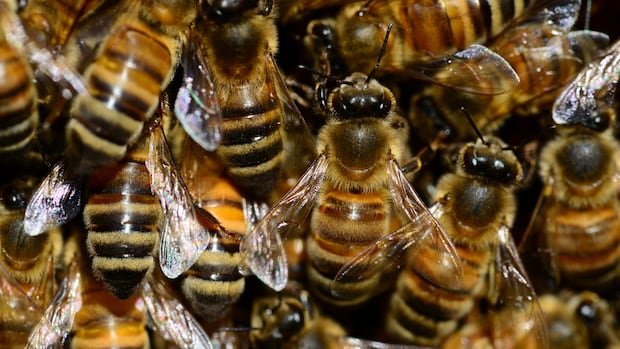

In Canada, the frigid climate poses challenges for beekeepers, as highlighted by a 2025 report revealing that over 41% of honeybee colonies in Alberta did not survive the winter. To address this issue, Beekeeping Innovations Ltd., based in the Calgary area, has introduced an innovative solution known as the Bee Cube. This fully climate-controlled apiary, situated in Okotoks, aims to provide a comfortable environment for multiple honeybee colonies to thrive during the winter months.
Herman Van Reekum, the company’s CEO, emphasized the primary objective of the Bee Cube is to support bees through the winter comfortably. Additionally, the Bee Cube offers a unique opportunity to revolutionize Canada’s beekeeping industry by focusing on queen bee reproduction in a safe and cost-effective manner.
Van Reekum highlighted the significance of producing queens locally to reduce the reliance on importing foreign queen bees, which currently stands at approximately 300,000 annually from countries like Australia, New Zealand, California, and Hawaii. Imported bees not only struggle to adapt to the new environment but also pose a risk of introducing harmful pests like varroa mites, which have been detrimental to honeybee populations globally.
The potential threat of pests like the Tropilaelaps mite underscores the importance of avoiding foreign bee imports. By establishing a domestic source of queens, Canadian beekeepers can mitigate mite infections and potentially breed bees with genetic resilience to withstand the harsh Canadian winters.
The process of queen bee reproduction involves selecting a larva to be fed royal jelly, triggering its development into a queen bee. Only one queen bee can exist in a hive, making the creation of additional queens a delicate process. By transferring queen cells to a queen-less colony, beekeepers can foster the emergence of new queens, which are then placed in individual cages to prevent conflict.
Van Reekum emphasized the significance of nurturing queen bees that have successfully endured Canadian winters, passing on robust genes to future generations. He aims to significantly increase queen bee production, with a target of 5,000 queens this year compared to 800 produced previously.
With Alberta housing nearly 40% of Canada’s bee colonies and being the country’s leading honey producer, the importance of sustainable beekeeping practices cannot be understated. The honey industry contributes significantly to Canada’s economy, with the 2025 honey harvest valued at $241 million. Beyond honey production, bees play a crucial role in pollinating crops, supporting billions in agricultural economic impact.
Van Reekum emphasized the vital role of bees in pollinating crops, highlighting that one-third of the food we consume is a direct result of bee pollination. The essential services provided by honeybees are integral to sustaining agricultural productivity and ensuring food security for Canadians.